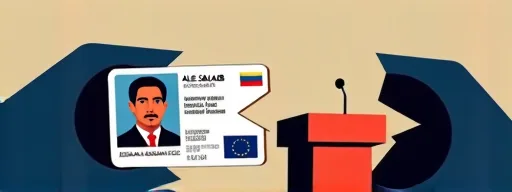
Saab Extradition and New Miami Probe Tighten US Net Around Maduro
Alex Saab’s extradition to the US signals a Venezuelan policy shift as a new Miami probe targets Nicolás Maduro for money laundering, widening the legal net.
The deportation of Alex Saab to the United States over the weekend marks a dramatic reversal in Venezuela’s posture and a significant escalation in American efforts to unravel the financial architecture of the former Chávez-Maduro regime. The Colombian-born businessman, once feted as a hero in Caracas, appeared before a federal judge in Miami on Monday wearing a prison jumpsuit and was ordered detained without bail until late June. US prosecutors have charged him with money laundering and conspiracy, alleging that he exploited a Venezuelan social assistance programme for illicit gain. The extradition, ordered by the country’s de facto leader Delcy Rodríguez, was justified as a matter of national interest, but analysts in Caracas view it as a pragmatic bid to distance the current administration from the worst excesses of its predecessor.
The move comes as the US Justice Department pursues a second criminal investigation into Nicolás Maduro himself, this one run out of the US Attorney’s Office in Miami. According to officials briefed on the matter, the probe has been active for months and was already under way when President Donald Trump authorised the military raid that captured Maduro and his wife Cilia Flores in January. The investigation, supervised by federal prosecutor Michael Berger alongside agents from the FBI, Homeland Security and the IRS, is examining potential money-laundering schemes linked to the former president. Viewed from Washington, the Miami case provides a parallel legal avenue to the existing indictment in New York, increasing the pressure on Maduro and his inner circle.
From Colombia, where Saab’s origins lie, there is keen interest in whether he will now cooperate with American prosecutors. His testimony could expose financial links between the Maduro network and Colombian actors, as well as shed light on opaque dealings such as the Segalmex scandal in Mexico, in which Saab’s name has surfaced alongside that of former Spanish Prime Minister José Luis Rodríguez Zapatero. The involvement of Zapatero, a longtime defender of the Chavista cause, illustrates the international reach of the alleged money-laundering web — a dimension that European investigators are now scrutinising. Meanwhile, the DEA’s role in transporting Saab to Florida underscores the operational coordination between US agencies.
The extradition and the new Miami investigation together signal that the US legal campaign against the former Venezuelan regime is entering a more aggressive phase. Should Saab decide to testify in exchange for leniency, prosecutors could gain direct insight into Maduro’s financial dealings, including the alleged use of phantom contracts and offshore accounts. The chavismo leadership, already fractured by internal rivalries, now faces the prospect of a cascade of disclosures that could further isolate its remaining allies. For the region, the developments represent a test of whether international criminal law can effectively dismantle the kleptocratic structures that flourished under the Bolivarian revolution.
| Latin American press | −0.20 | neutral |
|---|---|---|
| Atlantic / Anglosphere press | −0.80 | critical |
| Russian & CIS press | 0.00 | neutral |
The Venezuelan government defends Saab's deportation, stating he was never a Venezuelan citizen and used false documents. The decision was made in the country's interest, while investigations into alleged fraud continue.
Alex Saab, a close ally of former Venezuelan President Maduro, was deported to the United States on charges of laundering hundreds of millions of dollars linked to food and oil programs. He appeared in a Miami court on corruption and fraud charges.
Russian media report that the US Department of Justice has charged Alex Saab, an associate of Maduro, with laundering hundreds of millions of dollars from food and oil contracts. The article merely reports the facts without commentary.
Broaden your view
US Senate votes 86-11 to advance Russia sanctions bill authorising 100% tariffs on top energy buyers
2 languages · 40 outlets
From Economy & MarketsUS imposes 15% tariff and price floors on polysilicon to counter China’s supply-chain dominance
4 languages · 16 outlets
From TechnologyIndia cuts AI-content takedown deadline to three hours after Meta row
2 languages · 8 outlets