IISS Warns Faster Sabotage Campaign Raises Risk of Mass-Casualty Incident in Europe
British think tank reports sabotage attributed to Russia up 16 per cent in a year and arson and explosive use roughly doubled, warning a deadly incident is plausible.
How they tell it
21%7 outlets · 5 languages
3 critical voices: same tone, different emphasis
EUR Continental European press
Europe is under a Russian hybrid campaign: the Kremlin is testing increasingly capable sabotage, and without clear red lines a miscalculation could turn into a mass-casualty attack.
LAT Latin American press
The IISS report describes the Russian campaign as a growing threat to Europe: the risk of mass casualties is real, but the response depends on Europe's ability to set common thresholds.
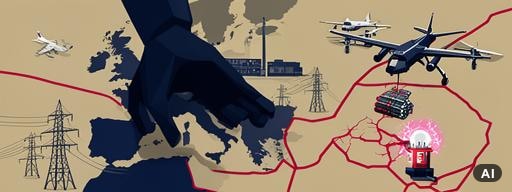
Sabotage operations attributed to Russia across Europe rose 16 per cent in the twelve months to the end of September 2026 compared with the same period a year earlier, while the use of arson and explosive devices roughly doubled, according to a report published this week by the International Institute for Strategic Studies, a British think tank. The IISS warns that increasingly skilled operatives are targeting railways, airports, energy networks and defence plants, and that as the margin for miscalculation narrows, an incident with many casualties becomes a plausible scenario — one that could generate demands for retaliation and expose divisions among European governments. According to the institute, the purpose of the campaign is to make European support for Kyiv costly enough that governments find it hard to sustain.
Germany and Poland are identified as the principal targets because their transport and industrial networks are described as decisive for supplying Ukraine. The report records 29 incidents linked to Moscow in Poland between October 2025 and September 2026, and finds that critical infrastructure accounted for more than half of all incidents in the past year. In November 2025 an explosive charge damaged a railway line from Warsaw towards the Ukrainian border; Poland's prime minister, Donald Tusk, described the act as unprecedented sabotage and later said the blast was probably intended to destroy a train. Moscow denies the accusations. On 4 August, a drone carrying explosives was found near a Ukrainian Antonov cargo aircraft at Leipzig, an aircraft used to move military supplies; investigators suspect a second drone struck a DHL freighter shortly after air traffic was suspended, and Germany pointed explicitly to Russia over the failed attack.
The IISS reports that most operations are still carried out by unskilled recruits, but that a semi-skilled group now uses more complex methods, including improvised explosive devices with timed and remote detonators. European authorities have made arrests, expelled intelligence officers and in some cases closed Russian consulates. The report says there is no clear evidence these measures have made sabotage a less attractive instrument of Kremlin policy; arrests remove intermediaries but are highly unlikely to deter the Russian intelligence services directing them. Attacks, it adds, run through layers of intermediaries and come in waves, concentrated on countries and sectors of strategic importance, and competing networks may exist, so dismantling one does not guarantee that new attacks are prevented.
No European government has publicly set out which level of damage would trigger which response, and the IISS argues this omission raises the risk that escalation becomes the primary instinct after a lethal operation; it calls on European states to signal publicly what level of damage would trigger what response. It identifies unconventional or hybrid war, rather than nuclear war, as the immediate threat to Europe. Charlie Edwards of the IISS said European energy systems, undersea cables, water treatment plants, supply chains and rail networks were exposed. Estonia is due to close all its remaining border crossings with Russia next Tuesday, having accused Moscow of involvement in a fire at a defence factory.
The Divergence across 3 points of view
- Critical: EUR, AFR, LAT
- Neutral: no bloc
- Favorable: no bloc
- Pale: the bloc has no reading of this story
Bloc by bloc, from the most critical to the most favourable
EUR Continental European pressCritical
Reading
Europe is under a Russian hybrid campaign: the Kremlin is testing increasingly capable sabotage, and without clear red lines a miscalculation could turn into a mass-casualty attack.
Description
A British think tank warns that Russian sabotage across Europe is escalating and could lead to a mass-casualty incident. The report points to railways, energy networks, airports and defence industries, describes increasingly capable proxy operatives and names Germany and Poland as key targets. It argues that Europe lacks clear red lines and that arrests and expulsions have not deterred the intelligence services directing the campaign.
Mechanismauthority chain
The alarm rests on an authoritative think tank, trend percentages, concrete infrastructure cases and policy recommendations, turning fear into a rational security diagnosis.
AFR Sub-Saharan African pressCritical
Reading
A British strategic institute warns that Russia is multiplying sabotage operations against European infrastructure, and the absence of a clear response leaves open the path to a mass-casualty event.
Description
A report by a British strategic institute warns that Russian destabilisation operations in Europe are multiplying and could soon cause many deaths. Railways, airports and energy networks are increasingly targeted, with explosives and arson roughly doubled in a year; Moscow denies responsibility. The threat is framed as hybrid and unconventional warfare, with no clear sign that countermeasures have made sabotage less attractive to the Kremlin.
Mechanismexpert attribution
The alarm gains credibility by being placed in an authoritative report with figures, a concrete case and a researcher's quote; Moscow's denial keeps the tone measured.
LAT Latin American pressCritical
Reading
The IISS report describes the Russian campaign as a growing threat to Europe: the risk of mass casualties is real, but the response depends on Europe's ability to set common thresholds.
Description
A report by the International Institute for Strategic Studies warns of a possible mass-casualty event in Europe as Russia-linked sabotage increases. It cites a 16% rise over twelve months, doubled use of explosives and arson, and Germany and Poland as the most exposed countries. The account presents the warning as a contingent risk, noting that arrests and expulsions have not clearly reduced the Kremlin's appetite for sabotage.
Mechanismprudential reporting
The risk is kept at arm's length through the form of a think-tank account, with conditional phrasing, figures and examples, so the alarm remains a factual contingency rather than a call to action.
This story appeared in
🇬🇷Greece2
🇧🇪Belgium1
🇧🇯Benin1
🇧🇷Brazil1
🇨🇾Cyprus1
🇮🇹Italy1
On the same topic
Broaden your view
IISS Warns Faster Sabotage Campaign Raises Risk of Mass-Casualty Incident in Europe
British think tank reports sabotage attributed to Russia up 16 per cent in a year and arson and explosive use roughly doubled, warning a deadly incident is plausible.
Sabotage operations attributed to Russia across Europe rose 16 per cent in the twelve months to the end of September 2026 compared with the same period a year earlier, while the use of arson and explosive devices roughly doubled, according to a report published this week by the International Institute for Strategic Studies, a British think tank. The IISS warns that increasingly skilled operatives are targeting railways, airports, energy networks and defence plants, and that as the margin for miscalculation narrows, an incident with many casualties becomes a plausible scenario — one that could generate demands for retaliation and expose divisions among European governments. According to the institute, the purpose of the campaign is to make European support for Kyiv costly enough that governments find it hard to sustain.
Germany and Poland are identified as the principal targets because their transport and industrial networks are described as decisive for supplying Ukraine. The report records 29 incidents linked to Moscow in Poland between October 2025 and September 2026, and finds that critical infrastructure accounted for more than half of all incidents in the past year. In November 2025 an explosive charge damaged a railway line from Warsaw towards the Ukrainian border; Poland's prime minister, Donald Tusk, described the act as unprecedented sabotage and later said the blast was probably intended to destroy a train. Moscow denies the accusations. On 4 August, a drone carrying explosives was found near a Ukrainian Antonov cargo aircraft at Leipzig, an aircraft used to move military supplies; investigators suspect a second drone struck a DHL freighter shortly after air traffic was suspended, and Germany pointed explicitly to Russia over the failed attack.
The IISS reports that most operations are still carried out by unskilled recruits, but that a semi-skilled group now uses more complex methods, including improvised explosive devices with timed and remote detonators. European authorities have made arrests, expelled intelligence officers and in some cases closed Russian consulates. The report says there is no clear evidence these measures have made sabotage a less attractive instrument of Kremlin policy; arrests remove intermediaries but are highly unlikely to deter the Russian intelligence services directing them. Attacks, it adds, run through layers of intermediaries and come in waves, concentrated on countries and sectors of strategic importance, and competing networks may exist, so dismantling one does not guarantee that new attacks are prevented.
No European government has publicly set out which level of damage would trigger which response, and the IISS argues this omission raises the risk that escalation becomes the primary instinct after a lethal operation; it calls on European states to signal publicly what level of damage would trigger what response. It identifies unconventional or hybrid war, rather than nuclear war, as the immediate threat to Europe. Charlie Edwards of the IISS said European energy systems, undersea cables, water treatment plants, supply chains and rail networks were exposed. Estonia is due to close all its remaining border crossings with Russia next Tuesday, having accused Moscow of involvement in a fire at a defence factory.
The Divergence across 3 points of view
- Critical: EUR, AFR, LAT
- Neutral: no bloc
- Favorable: no bloc
- Pale: the bloc has no reading of this story
EUR Continental European pressCritical
Reading
Europe is under a Russian hybrid campaign: the Kremlin is testing increasingly capable sabotage, and without clear red lines a miscalculation could turn into a mass-casualty attack.
Description
A British think tank warns that Russian sabotage across Europe is escalating and could lead to a mass-casualty incident. The report points to railways, energy networks, airports and defence industries, describes increasingly capable proxy operatives and names Germany and Poland as key targets. It argues that Europe lacks clear red lines and that arrests and expulsions have not deterred the intelligence services directing the campaign.
Mechanismauthority chain
The alarm rests on an authoritative think tank, trend percentages, concrete infrastructure cases and policy recommendations, turning fear into a rational security diagnosis.
Bloc by bloc, from the most critical to the most favourable
EUR Continental European pressCritical
Reading
Europe is under a Russian hybrid campaign: the Kremlin is testing increasingly capable sabotage, and without clear red lines a miscalculation could turn into a mass-casualty attack.
Description
A British think tank warns that Russian sabotage across Europe is escalating and could lead to a mass-casualty incident. The report points to railways, energy networks, airports and defence industries, describes increasingly capable proxy operatives and names Germany and Poland as key targets. It argues that Europe lacks clear red lines and that arrests and expulsions have not deterred the intelligence services directing the campaign.
Mechanismauthority chain
The alarm rests on an authoritative think tank, trend percentages, concrete infrastructure cases and policy recommendations, turning fear into a rational security diagnosis.
AFR Sub-Saharan African pressCritical
Reading
A British strategic institute warns that Russia is multiplying sabotage operations against European infrastructure, and the absence of a clear response leaves open the path to a mass-casualty event.
Description
A report by a British strategic institute warns that Russian destabilisation operations in Europe are multiplying and could soon cause many deaths. Railways, airports and energy networks are increasingly targeted, with explosives and arson roughly doubled in a year; Moscow denies responsibility. The threat is framed as hybrid and unconventional warfare, with no clear sign that countermeasures have made sabotage less attractive to the Kremlin.
Mechanismexpert attribution
The alarm gains credibility by being placed in an authoritative report with figures, a concrete case and a researcher's quote; Moscow's denial keeps the tone measured.
LAT Latin American pressCritical
Reading
The IISS report describes the Russian campaign as a growing threat to Europe: the risk of mass casualties is real, but the response depends on Europe's ability to set common thresholds.
Description
A report by the International Institute for Strategic Studies warns of a possible mass-casualty event in Europe as Russia-linked sabotage increases. It cites a 16% rise over twelve months, doubled use of explosives and arson, and Germany and Poland as the most exposed countries. The account presents the warning as a contingent risk, noting that arrests and expulsions have not clearly reduced the Kremlin's appetite for sabotage.
Mechanismprudential reporting
The risk is kept at arm's length through the form of a think-tank account, with conditional phrasing, figures and examples, so the alarm remains a factual contingency rather than a call to action.