Senior Trump Officials Take Up Residence in Washington's Army Quarters
About six senior administration officials have moved behind the gates of Washington's military housing, citing threats from Iran and domestic political violence, as Congress presses on costs.
How they tell it
7%15 outlets · 9 languages
none critical, 7 neutral, none favorable
Read the divergences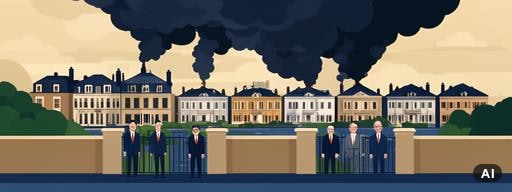
About six members of Donald Trump's administration now live in military housing inside Washington, a figure that CNN and outlets relaying its reporting describe as historically high for senior civilian officials. The residences, more than a century old, sit behind controlled gates and walls that separate them from the rest of the capital, and were originally intended for generals and other senior military officers. The officials say they feel safer there than anywhere else in the city.
The most recent arrival is Treasury Secretary Scott Bessent, who left his Georgetown home for a secure base; in a CNBC interview this month he attributed the move to Iranian threats and said he would not be intimidated. Todd Blanche, the attorney general, has also moved to a base over safety concerns, according to sources cited in the CNN reporting, after his predecessor Pam Bondi lived in one in 2025. Stephen Miller, the White House chief of staff, moved with his wife and four children from Virginia after a woman protested outside the family home and distributed leaflets carrying their address; a White House official described an organised and documented campaign of tracking, doxxing and threats. Miller, Secretary of State Marco Rubio and Defence Secretary Pete Hegseth are neighbours at Fort McNair, in houses known as Generals' Row, on a peninsula where the Potomac and Anacostia rivers meet.
According to the CNN reporting, circulated by outlets in several languages, Iran was developing plans to target senior Trump officials in Washington with a so-called dirty bomb or a chemical weapon, with specific locations and targets listed; the attack was not considered imminent, and, according to The Insider, Iran's mission to the United Nations called the chemical-attack allegations fabricated. Officials and analysts also cite domestic political violence, including the killing of the conservative activist Charlie Kirk, among the reasons some members of the administration have left private addresses.
Officials pay rent for the quarters, usually above $4,500 a month, under a preferential arrangement set by law in 2008; laSexta reported figures above €4,000. Congress has taken an interest in the terms: Hegseth was criticised last year after lawmakers learned the Army was preparing to spend $137,297 on repairs and upgrades to his Fort McNair residence, and George Whitesides, a Democratic congressman from California, has questioned whether political appointees pay market rates. Thomas Kahn of American University's centre for the study of Congress and the presidency said officials already lived in a bubble of security details and managed schedules, and that the shift to enclosed bases deepens their separation from ordinary neighbourhoods; experts cited in the coverage expect the practice to continue under Republican or Democratic administrations alike.
Precedent exists but is thin: Robert Gates, defence secretary under George W. Bush and Barack Obama, was the first to live in military housing, and the Pentagon argued in 2008 that using existing base security saved taxpayers the cost of round-the-clock protection at a private home. The next factual step is procedural: the Pentagon is due to report to the House Armed Services Committee before spring on the politically appointed officials living in military housing, setting out the threats invoked, the legal basis for the arrangement and the rental costs.
The Divergence across 7 points of view
- Critical: no bloc
- Neutral: EUR, Other sources, ALM, LAT, PALESTINESE, IRN, RUS
- Favorable: no bloc
- Pale: the bloc has no reading of this story
Bloc by bloc, from the most critical to the most favourable
EUR Continental European pressNeutral
Reading
Security concerns are acknowledged, yet the arrangement is judged against democratic norms and public-cost questions rather than accepted as a purely protective step.
Description
The move is framed as a security response to Iranian threats and domestic violence, but also as a controversy over democratic tradition, public housing and taxpayer costs. Some versions stress protected comfort, others stress congressional oversight and the officials’ growing distance from ordinary citizens. Partial extracts limit some detail.
Mechanismsecurity-cost tension
The narrative alternates threat language with rent, oversight and isolation details, making security and its democratic cost visible in the same frame.
Other sourcesNeutral
Reading
Official security fears are granted credibility, but the fortified seclusion is held up to congressional and democratic scrutiny over rent and costs.
Description
Six senior administration officials have moved into Fort McNair and other protected military housing, with Iranian death threats and domestic political violence cited as reasons. The account also details rents, congressional scrutiny, the isolation of officials and Democratic criticism over costs and Hegseth’s renovation. Partial extracts limit some detail.
Mechanismfactual balancing
Security justifications are set beside rent figures, legal oversight and renovation costs, so the official rationale remains visible while its price is measured.
ALM Arab Levant-Maghreb pressNeutral
Reading
Official security claims are given room, but the retreat is also measured against a democratic tradition of civilian leaders living among citizens.
Description
The move is portrayed as an unusual retreat into walled military housing by senior civilian officials, driven by external threats and domestic political violence. The account balances official security claims with expert warnings about isolation, congressional rent questions and historical precedent. One sampled item is only a snippet.
Mechanisminstitutional distance
Expert commentary, rent oversight and historical precedent are set alongside threat descriptions, turning the move into a debate about isolation as well as protection.
LAT Latin American pressNeutral
Reading
The security alert is foregrounded as the reason for the move, while the report also records the political and financial questions that qualify it.
Description
The story is framed around Iranian retaliation fears and security alerts driving several Trump officials into heavily guarded military bases near Washington. It also notes domestic political violence, congressional demands for legal and cost explanations, and concerns about the leadership’s distance from the public.
Mechanismchain attribution
Threat language opens the account, then legal, rental and domestic-violence details are chained in, so the official explanation remains prominent but not unexamined.
PALESTINESENeutral
Reading
The move is treated as a real security response, but the precedent is also framed through legal accountability and the officials’ separation from ordinary life.
Description
Six senior officials are reported to have moved into fortified military housing in an unusual precedent, with security threats and domestic violence cited as causes. The account stresses the legal and rental questions raised by legislators and experts’ warnings that the officials are becoming more isolated from citizens.
Mechanismsecurity-legal juxtaposition
Legal questions and expert warnings about isolation are juxtaposed with the threat rationale, making the precedent seem both understandable and democratically costly.
IRN Iranian & allied pressNeutral
Reading
Iranian threat claims are repeated as attributed and unconfirmed, while the unprecedented scale of the housing arrangement and its cost are placed at the centre.
Description
The reported move is presented as an unprecedented concentration of civilian officials in protected military housing, with Iranian threat claims carefully attributed to US reporting. The emphasis falls on historical rarity, congressional questions over legal basis and rent, and the risk of official isolation. A segmented extract limits some detail.
Mechanismcautious attribution
By marking each threat claim as reported and shifting to precedent, rent and oversight, the account keeps the security rationale at arm’s length.
RUS Russian & CIS pressNeutral
Reading
The security rationale is accepted as newsworthy but kept conditional, with Iranian threat reports explicitly marked as US-sourced and denied by Tehran.
Description
The relocations are reported as a major security upgrade for senior officials, with Iranian and domestic threat scenarios listed and the sixth official left unnamed. The account adds a caution that the attack reports come from US sources and that Tehran has denied them, alongside congressional questions on costs.
Mechanismsource caveat
The account lists official threat scenarios, then inserts source caveats and Tehran’s denial, preventing the alarm from becoming a closed fact.
This story appeared in
🇮🇷Iran3
🇧🇾Belarus2
🇪🇬Egypt1
🇪🇸Spain1
🇭🇷Croatia1
🇱🇧Lebanon1
🇱🇻Latvia1
🇵🇸Palestinian Territories1
🇵🇾Paraguay1
🇷🇴Romania1
On the same topic
Broaden your view
Senior Trump Officials Take Up Residence in Washington's Army Quarters
About six senior administration officials have moved behind the gates of Washington's military housing, citing threats from Iran and domestic political violence, as Congress presses on costs.
About six members of Donald Trump's administration now live in military housing inside Washington, a figure that CNN and outlets relaying its reporting describe as historically high for senior civilian officials. The residences, more than a century old, sit behind controlled gates and walls that separate them from the rest of the capital, and were originally intended for generals and other senior military officers. The officials say they feel safer there than anywhere else in the city.
The most recent arrival is Treasury Secretary Scott Bessent, who left his Georgetown home for a secure base; in a CNBC interview this month he attributed the move to Iranian threats and said he would not be intimidated. Todd Blanche, the attorney general, has also moved to a base over safety concerns, according to sources cited in the CNN reporting, after his predecessor Pam Bondi lived in one in 2025. Stephen Miller, the White House chief of staff, moved with his wife and four children from Virginia after a woman protested outside the family home and distributed leaflets carrying their address; a White House official described an organised and documented campaign of tracking, doxxing and threats. Miller, Secretary of State Marco Rubio and Defence Secretary Pete Hegseth are neighbours at Fort McNair, in houses known as Generals' Row, on a peninsula where the Potomac and Anacostia rivers meet.
According to the CNN reporting, circulated by outlets in several languages, Iran was developing plans to target senior Trump officials in Washington with a so-called dirty bomb or a chemical weapon, with specific locations and targets listed; the attack was not considered imminent, and, according to The Insider, Iran's mission to the United Nations called the chemical-attack allegations fabricated. Officials and analysts also cite domestic political violence, including the killing of the conservative activist Charlie Kirk, among the reasons some members of the administration have left private addresses.
Officials pay rent for the quarters, usually above $4,500 a month, under a preferential arrangement set by law in 2008; laSexta reported figures above €4,000. Congress has taken an interest in the terms: Hegseth was criticised last year after lawmakers learned the Army was preparing to spend $137,297 on repairs and upgrades to his Fort McNair residence, and George Whitesides, a Democratic congressman from California, has questioned whether political appointees pay market rates. Thomas Kahn of American University's centre for the study of Congress and the presidency said officials already lived in a bubble of security details and managed schedules, and that the shift to enclosed bases deepens their separation from ordinary neighbourhoods; experts cited in the coverage expect the practice to continue under Republican or Democratic administrations alike.
Precedent exists but is thin: Robert Gates, defence secretary under George W. Bush and Barack Obama, was the first to live in military housing, and the Pentagon argued in 2008 that using existing base security saved taxpayers the cost of round-the-clock protection at a private home. The next factual step is procedural: the Pentagon is due to report to the House Armed Services Committee before spring on the politically appointed officials living in military housing, setting out the threats invoked, the legal basis for the arrangement and the rental costs.
The Divergence across 7 points of view
- Critical: no bloc
- Neutral: EUR, Other sources, ALM, LAT, PALESTINESE, IRN, RUS
- Favorable: no bloc
- Pale: the bloc has no reading of this story
EUR Continental European pressNeutral
Reading
Security concerns are acknowledged, yet the arrangement is judged against democratic norms and public-cost questions rather than accepted as a purely protective step.
Description
The move is framed as a security response to Iranian threats and domestic violence, but also as a controversy over democratic tradition, public housing and taxpayer costs. Some versions stress protected comfort, others stress congressional oversight and the officials’ growing distance from ordinary citizens. Partial extracts limit some detail.
Mechanismsecurity-cost tension
The narrative alternates threat language with rent, oversight and isolation details, making security and its democratic cost visible in the same frame.
Bloc by bloc, from the most critical to the most favourable
EUR Continental European pressNeutral
Reading
Security concerns are acknowledged, yet the arrangement is judged against democratic norms and public-cost questions rather than accepted as a purely protective step.
Description
The move is framed as a security response to Iranian threats and domestic violence, but also as a controversy over democratic tradition, public housing and taxpayer costs. Some versions stress protected comfort, others stress congressional oversight and the officials’ growing distance from ordinary citizens. Partial extracts limit some detail.
Mechanismsecurity-cost tension
The narrative alternates threat language with rent, oversight and isolation details, making security and its democratic cost visible in the same frame.
Other sourcesNeutral
Reading
Official security fears are granted credibility, but the fortified seclusion is held up to congressional and democratic scrutiny over rent and costs.
Description
Six senior administration officials have moved into Fort McNair and other protected military housing, with Iranian death threats and domestic political violence cited as reasons. The account also details rents, congressional scrutiny, the isolation of officials and Democratic criticism over costs and Hegseth’s renovation. Partial extracts limit some detail.
Mechanismfactual balancing
Security justifications are set beside rent figures, legal oversight and renovation costs, so the official rationale remains visible while its price is measured.
ALM Arab Levant-Maghreb pressNeutral
Reading
Official security claims are given room, but the retreat is also measured against a democratic tradition of civilian leaders living among citizens.
Description
The move is portrayed as an unusual retreat into walled military housing by senior civilian officials, driven by external threats and domestic political violence. The account balances official security claims with expert warnings about isolation, congressional rent questions and historical precedent. One sampled item is only a snippet.
Mechanisminstitutional distance
Expert commentary, rent oversight and historical precedent are set alongside threat descriptions, turning the move into a debate about isolation as well as protection.
LAT Latin American pressNeutral
Reading
The security alert is foregrounded as the reason for the move, while the report also records the political and financial questions that qualify it.
Description
The story is framed around Iranian retaliation fears and security alerts driving several Trump officials into heavily guarded military bases near Washington. It also notes domestic political violence, congressional demands for legal and cost explanations, and concerns about the leadership’s distance from the public.
Mechanismchain attribution
Threat language opens the account, then legal, rental and domestic-violence details are chained in, so the official explanation remains prominent but not unexamined.
PALESTINESENeutral
Reading
The move is treated as a real security response, but the precedent is also framed through legal accountability and the officials’ separation from ordinary life.
Description
Six senior officials are reported to have moved into fortified military housing in an unusual precedent, with security threats and domestic violence cited as causes. The account stresses the legal and rental questions raised by legislators and experts’ warnings that the officials are becoming more isolated from citizens.
Mechanismsecurity-legal juxtaposition
Legal questions and expert warnings about isolation are juxtaposed with the threat rationale, making the precedent seem both understandable and democratically costly.
IRN Iranian & allied pressNeutral
Reading
Iranian threat claims are repeated as attributed and unconfirmed, while the unprecedented scale of the housing arrangement and its cost are placed at the centre.
Description
The reported move is presented as an unprecedented concentration of civilian officials in protected military housing, with Iranian threat claims carefully attributed to US reporting. The emphasis falls on historical rarity, congressional questions over legal basis and rent, and the risk of official isolation. A segmented extract limits some detail.
Mechanismcautious attribution
By marking each threat claim as reported and shifting to precedent, rent and oversight, the account keeps the security rationale at arm’s length.
RUS Russian & CIS pressNeutral
Reading
The security rationale is accepted as newsworthy but kept conditional, with Iranian threat reports explicitly marked as US-sourced and denied by Tehran.
Description
The relocations are reported as a major security upgrade for senior officials, with Iranian and domestic threat scenarios listed and the sixth official left unnamed. The account adds a caution that the attack reports come from US sources and that Tehran has denied them, alongside congressional questions on costs.
Mechanismsource caveat
The account lists official threat scenarios, then inserts source caveats and Tehran’s denial, preventing the alarm from becoming a closed fact.