US Counter-Drone Systems Repel Six Drones Over RAF Lakenheath as Iran Link Stays Unverified
About six unmanned aircraft were driven off on 13 November and none was recovered, leaving Washington and London unable to rule out that a payload was carried, according to a Financial Times report.
How they tell it
22%39 outlets · 14 languages
5 critical, 10 neutral, none favorable
ISR Israeli pressCritical
Jerusalem's security desk reads the episode as another test of Western base defence against Iran, with the unknown payload at the centre.
GIAPPONE_COREA_TAIWANNeutral
Seoul's newsroom reports the incident as a distant security datum, complete with personnel figures and alert levels.
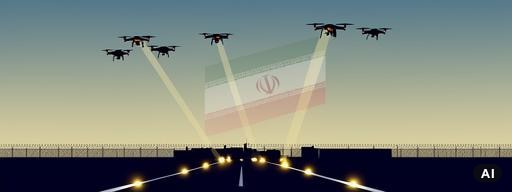
United States military personnel used counter-drone technology to drive off about six unmanned aircraft over RAF Lakenheath in Suffolk on 13 November, according to a Financial Times report published on Saturday that cited people familiar with the matter. A security alert instructed US personnel at the base to shelter in place. Neither British nor American personnel recovered any of the drones. The base houses the US Air Force's 48th Fighter Wing and, with almost 7,000 personnel, is the largest US fighter jet operation in Europe.
Britain's Ministry of Defence told Reuters that Ministry of Defence Police and Suffolk Police worked closely with USAF Security Forces in responding to reports of unauthorised drone activity, and that the situation was quickly resolved, with RAF Lakenheath returning to normal security and force protection measures. A US Air Force spokesperson said personnel had responded to suspected unauthorised drone activity and that no personnel, aircraft or infrastructure were affected. The White House and the Pentagon did not immediately respond to requests for comment, and US Air Forces in Europe declined to identify the counter-drone systems used, citing operational security, while urging the community to remain vigilant. The FT's sources suspected a link to Iran; the newspaper produced no definitive evidence of one, and Tehran has rejected accusations of involvement in the September incident at RAF Fairford or of other malign activity in Britain.
Because no drone was recovered, authorities in Washington and London cannot rule out that a weapon, espionage equipment or other payload was attached. The base confirmed in September that it was on Charlie alert, the second-highest threat level used by the US defence department. In the September incident at RAF Fairford in Gloucestershire, a threat linked to Iran prompted the removal of American B-1 bombers, President Donald Trump said last month. Britain is allocating £470 million to strengthen physical protection, surveillance and counter-drone capabilities at military sites, and the RAF is moving some aircraft into hangars overnight and plans anti-drone netting around others parked in the open, according to Sky News.
In London, Nick Timothy, the Conservative MP for West Suffolk and a shadow cabinet minister, told the FT of his concern about the Sunnica solar and battery farm under construction about 2.5km from RAF Mildenhall, saying the Ministry of Defence had acknowledged it did not consider sabotage or arson during planning. A British government spokesperson said all projects are subject to a rigorous planning process in which security is considered.
Authorities have not said how the drones were repelled, whether they were neutralised or merely driven away, or where they came from. No public evidence has established Iranian involvement. The Ministry of Defence said it continually reviews and strengthens its security arrangements, and a ministry spokesperson said British officials were working closely with their US counterparts to establish the facts.
The Divergence across 15 points of view
- Critical: ISR, ATL, PALESTINESE, RUS, LAT
- Neutral: ALM, TUR, EUR, IRN, GLF, IND, AFR, GIAPPONE_COREA_TAIWAN, SEA, Other sources
- Favorable: no bloc
- Pale: the bloc has no reading of this story
Bloc by bloc, from the most critical to the most favourable
ISR Israeli pressCritical
Reading
Jerusalem's security desk reads the episode as another test of Western base defence against Iran, with the unknown payload at the centre.
Description
US counter-drone systems scattered a swarm over a British base and none of the aircraft was recovered, so the payload question stays open. The episode is listed alongside a foiled plot at another base and Tehran's denials.
Mechanismuncertainty as threat
The unknown payload and the base's second-highest alert level are placed early, so uncertainty itself becomes the threat.
ATL Atlantic / Anglosphere pressCritical
Reading
Washington's security apparatus speaks: an incursion was repelled, and Iran is the suspect.
Description
US forces repelled a drone swarm over a British base hosting American fighters, and blame is pointed at Iran. The episode is folded into a wider threat picture — earlier bomber evacuations, foiled plots, congressional calls for hearings — while the counter-drone means stay classified.
Mechanismthreat stacking
Confirmed operational facts are chained to earlier Iran-linked episodes, so suspicion arrives already looking like a pattern.
The outlets in this area do not agree with one another.
PALESTINESECritical
Reading
The Palestinian desk frames the story around British soil being used for operations against Iran and around warnings that such bases are targets.
Description
A drone attack on a British base used by American forces was foiled: six aircraft involved, no debris recovered. The account adds that these bases serve operations against Iran and that Iranian officials have warned such sites are targets.
Mechanismsymmetrical escalation
Context on the war and on earlier Iranian warnings is placed after the incident, so the threat is made to look reciprocal.
RUS Russian & CIS pressCritical
Reading
Moscow-aligned desks relay the episode but place the burden of proof on London and Washington: suspicion is reported, evidence is said to be missing.
Description
A drone episode over a British base is retold with the Western claim about Iran kept in quotation marks and the absence of recovered hardware underlined. The account notes that no official confirmation of an Iranian hand ever came.
Mechanismburden-of-proof reversal
Insistence on the missing debris and on the absence of official attribution turns a security story into a question about Western credibility.
LAT Latin American pressCritical
Reading
The Spanish agency voice, reprinted in Mexico City, puts a suspected Iranian attack in the headline and surrounds it with US-Iranian escalation.
Description
A suspected Iranian drone attack on a British base was contained by US forces: six aircraft, no devices recovered. The episode is set against US threats toward Iran and Britain's new spending on base security.
Mechanismescalation ladder
Attribution is compressed into the headline while the body layers American threats and British spending, so the incident reads as one rung on an escalation ladder.
ALM Arab Levant-Maghreb pressNeutral
Reading
Beirut and Erbil desks treat the episode as a live front-line signal, linking a Suffolk airfield to a regional war.
Description
Six drones over a base used by US forces put Washington and London on alert; types, payloads and authorship remain open. One account situates the episode inside an active war in which Iran has already launched drones and missiles at US forces.
Mechanismregional anchoring
The regional war is set as backdrop before the details arrive, so one night's alert reads as part of an ongoing exchange.
TUR Turkish pressNeutral
Reading
Ankara's desks put the suspect in the headline and the caveat in the body.
Description
US systems drove about six drones away from a British base; nothing was recovered and the payload is unknown. Iran is named as the suspected party, with the caveat that no definitive evidence was offered.
Mechanismheadline-first suspicion
The Iranian link is moved up front while the absence of proof waits for a later paragraph, so alarm arrives before qualification.
EUR Continental European pressNeutral
Reading
Allied governments brief in measured terms: the incident is confirmed, the culprit is not.
Description
A handful of drones approached a base used by US aircraft in eastern England and were pushed away; the defences worked, no damage was reported. Attribution rests on unnamed sources pointing at Iran, and official statements in London and Washington stop short of naming anyone.
Mechanismattribution in reported speech
Official statements are quoted in full while the Iranian link stays in reported speech, so the alliance line is carried without being endorsed.
IRN Iranian & allied pressNeutral
Reading
Tehran speaks through the gaps in the Western account: a base on high alert, a security budget, open questions about payloads.
Description
Six drones reached a British base used by US aircraft and were driven off, with nothing recovered; the story moves to what British defences still lack. Alert levels, a £470m security programme and warnings about hostile states hitting infrastructure carry the narrative.
Mechanismshift to the defender
Attention is turned to British vulnerabilities and to warnings about hostile states striking infrastructure, so the episode reads as the ally's defence problem.
GLF Arab Gulf pressNeutral
Reading
Riyadh's English-language desk stays with the wire: the incident is confirmed, the suspicion is attributed, the denial is printed.
Description
Wire copy: about six drones were repelled at a British base, no hardware recovered, Iran suspected by unnamed sources. Official statements from London are quoted in full and Tehran's denials are recorded.
Mechanismbalanced attribution
Neutral attribution formulas — sources say, Tehran rejects — hold the balance without adjudicating.
IND Indian & South Asian pressNeutral
Reading
South Asian desks carry the episode as a wire story, with technical detail and the Iranian denial kept to the last lines.
Description
A swarm of about six drones over a US-used base in England was repelled, none recovered, with the payload question left open. The base's size and alert level are given, and Tehran's denial of other incidents is noted.
Mechanismtechnical density
Operational specifics — wing size, alert level, counter-drone secrecy — give the copy density while attribution stays in reported speech.
AFR Sub-Saharan African pressNeutral
Reading
Francophone and East African desks separate what is known from what is merely alleged, giving the base's history and the missing evidence equal weight.
Description
Six drones over an American base in England were repelled and nothing was recovered, so nobody can say what they carried. The account stresses that the Iranian link rests on anonymous sources and recalls an earlier, unresolved drone episode at the same base.
Mechanismpaired caveats
Each claim is immediately paired with its limit — no proof, no debris, no named official — so the story is told as an open file.
GIAPPONE_COREA_TAIWANNeutral
Reading
Seoul's newsroom reports the incident as a distant security datum, complete with personnel figures and alert levels.
Description
A US fighter base in England was approached by about six drones and answered with counter-drone systems; nothing was hit. The report adds the base's alert level and size, plus Tehran's denial of involvement.
Mechanismscale as context
Details on staffing, alert level and payload uncertainty are laid out in wire order, so scale stands in for judgement.
SEA Southeast Asian pressNeutral
Reading
Singapore and Kuala Lumpur desks reduce the story to confirmed facts plus attributed suspicion, noting both governments' silence.
Description
About six drones approached a British base used by US aircraft and were repelled; no damage, no recovered hardware. The Iranian link is reported as suspicion from unnamed sources, while Washington and London stay silent.
Mechanismstatement-suspicion alternation
Short wire paragraphs alternate official statements and reported suspicion, so no single claim is allowed to dominate.
Other sourcesNeutral
Reading
A specialist Iran-watching desk relays the wire text without adding interpretation, closing on Tehran's denial.
Description
Wire copy records that about six drones were repelled at a British base, that unnamed sources suspect Iran and that Tehran denies it. Official statements are quoted and the White House and Pentagon are noted as not responding.
Mechanismflat relay
Suspicion and denial are printed in the same register, and the subscription prompt sits outside the news frame.
This story appeared in
🇷🇺Russia3
🇹🇷Türkiye3
🇺🇸United States3
🇸🇬Singapore2
🇦🇹Austria1
🇦🇿Azerbaijan1
🇧🇦Bosnia & Herzegovina1
🇧🇩Bangladesh1
🇧🇯Benin1
Show all 39 outlets
🇨🇭Switzerland1
🇨🇾Cyprus1
🇨🇿Czechia1
🇩🇪Germany1
🇫🇷France1
🇬🇷Greece1
🇭🇷Croatia1
🇮🇱Israel1
🇮🇳India1
🇮🇶Iraq1
🇮🇷Iran1
🇮🇹Italy1
🇰🇪Kenya1
🇰🇷South Korea1
🇱🇧Lebanon1
🇱🇹Lithuania1
🇲🇽Mexico1
🇲🇾Malaysia1
🇵🇸Palestinian Territories1
🇸🇦Saudi Arabia1
On the same topic
Broaden your view
US Counter-Drone Systems Repel Six Drones Over RAF Lakenheath as Iran Link Stays Unverified
About six unmanned aircraft were driven off on 13 November and none was recovered, leaving Washington and London unable to rule out that a payload was carried, according to a Financial Times report.
United States military personnel used counter-drone technology to drive off about six unmanned aircraft over RAF Lakenheath in Suffolk on 13 November, according to a Financial Times report published on Saturday that cited people familiar with the matter. A security alert instructed US personnel at the base to shelter in place. Neither British nor American personnel recovered any of the drones. The base houses the US Air Force's 48th Fighter Wing and, with almost 7,000 personnel, is the largest US fighter jet operation in Europe.
Britain's Ministry of Defence told Reuters that Ministry of Defence Police and Suffolk Police worked closely with USAF Security Forces in responding to reports of unauthorised drone activity, and that the situation was quickly resolved, with RAF Lakenheath returning to normal security and force protection measures. A US Air Force spokesperson said personnel had responded to suspected unauthorised drone activity and that no personnel, aircraft or infrastructure were affected. The White House and the Pentagon did not immediately respond to requests for comment, and US Air Forces in Europe declined to identify the counter-drone systems used, citing operational security, while urging the community to remain vigilant. The FT's sources suspected a link to Iran; the newspaper produced no definitive evidence of one, and Tehran has rejected accusations of involvement in the September incident at RAF Fairford or of other malign activity in Britain.
Because no drone was recovered, authorities in Washington and London cannot rule out that a weapon, espionage equipment or other payload was attached. The base confirmed in September that it was on Charlie alert, the second-highest threat level used by the US defence department. In the September incident at RAF Fairford in Gloucestershire, a threat linked to Iran prompted the removal of American B-1 bombers, President Donald Trump said last month. Britain is allocating £470 million to strengthen physical protection, surveillance and counter-drone capabilities at military sites, and the RAF is moving some aircraft into hangars overnight and plans anti-drone netting around others parked in the open, according to Sky News.
In London, Nick Timothy, the Conservative MP for West Suffolk and a shadow cabinet minister, told the FT of his concern about the Sunnica solar and battery farm under construction about 2.5km from RAF Mildenhall, saying the Ministry of Defence had acknowledged it did not consider sabotage or arson during planning. A British government spokesperson said all projects are subject to a rigorous planning process in which security is considered.
Authorities have not said how the drones were repelled, whether they were neutralised or merely driven away, or where they came from. No public evidence has established Iranian involvement. The Ministry of Defence said it continually reviews and strengthens its security arrangements, and a ministry spokesperson said British officials were working closely with their US counterparts to establish the facts.
The Divergence across 15 points of view
- Critical: ISR, ATL, PALESTINESE, RUS, LAT
- Neutral: ALM, TUR, EUR, IRN, GLF, IND, AFR, GIAPPONE_COREA_TAIWAN, SEA, Other sources
- Favorable: no bloc
- Pale: the bloc has no reading of this story
ISR Israeli pressCritical
Reading
Jerusalem's security desk reads the episode as another test of Western base defence against Iran, with the unknown payload at the centre.
Description
US counter-drone systems scattered a swarm over a British base and none of the aircraft was recovered, so the payload question stays open. The episode is listed alongside a foiled plot at another base and Tehran's denials.
Mechanismuncertainty as threat
The unknown payload and the base's second-highest alert level are placed early, so uncertainty itself becomes the threat.
Bloc by bloc, from the most critical to the most favourable
ISR Israeli pressCritical
Reading
Jerusalem's security desk reads the episode as another test of Western base defence against Iran, with the unknown payload at the centre.
Description
US counter-drone systems scattered a swarm over a British base and none of the aircraft was recovered, so the payload question stays open. The episode is listed alongside a foiled plot at another base and Tehran's denials.
Mechanismuncertainty as threat
The unknown payload and the base's second-highest alert level are placed early, so uncertainty itself becomes the threat.
ATL Atlantic / Anglosphere pressCritical
Reading
Washington's security apparatus speaks: an incursion was repelled, and Iran is the suspect.
Description
US forces repelled a drone swarm over a British base hosting American fighters, and blame is pointed at Iran. The episode is folded into a wider threat picture — earlier bomber evacuations, foiled plots, congressional calls for hearings — while the counter-drone means stay classified.
Mechanismthreat stacking
Confirmed operational facts are chained to earlier Iran-linked episodes, so suspicion arrives already looking like a pattern.
The outlets in this area do not agree with one another.
PALESTINESECritical
Reading
The Palestinian desk frames the story around British soil being used for operations against Iran and around warnings that such bases are targets.
Description
A drone attack on a British base used by American forces was foiled: six aircraft involved, no debris recovered. The account adds that these bases serve operations against Iran and that Iranian officials have warned such sites are targets.
Mechanismsymmetrical escalation
Context on the war and on earlier Iranian warnings is placed after the incident, so the threat is made to look reciprocal.
RUS Russian & CIS pressCritical
Reading
Moscow-aligned desks relay the episode but place the burden of proof on London and Washington: suspicion is reported, evidence is said to be missing.
Description
A drone episode over a British base is retold with the Western claim about Iran kept in quotation marks and the absence of recovered hardware underlined. The account notes that no official confirmation of an Iranian hand ever came.
Mechanismburden-of-proof reversal
Insistence on the missing debris and on the absence of official attribution turns a security story into a question about Western credibility.
LAT Latin American pressCritical
Reading
The Spanish agency voice, reprinted in Mexico City, puts a suspected Iranian attack in the headline and surrounds it with US-Iranian escalation.
Description
A suspected Iranian drone attack on a British base was contained by US forces: six aircraft, no devices recovered. The episode is set against US threats toward Iran and Britain's new spending on base security.
Mechanismescalation ladder
Attribution is compressed into the headline while the body layers American threats and British spending, so the incident reads as one rung on an escalation ladder.
ALM Arab Levant-Maghreb pressNeutral
Reading
Beirut and Erbil desks treat the episode as a live front-line signal, linking a Suffolk airfield to a regional war.
Description
Six drones over a base used by US forces put Washington and London on alert; types, payloads and authorship remain open. One account situates the episode inside an active war in which Iran has already launched drones and missiles at US forces.
Mechanismregional anchoring
The regional war is set as backdrop before the details arrive, so one night's alert reads as part of an ongoing exchange.
TUR Turkish pressNeutral
Reading
Ankara's desks put the suspect in the headline and the caveat in the body.
Description
US systems drove about six drones away from a British base; nothing was recovered and the payload is unknown. Iran is named as the suspected party, with the caveat that no definitive evidence was offered.
Mechanismheadline-first suspicion
The Iranian link is moved up front while the absence of proof waits for a later paragraph, so alarm arrives before qualification.
EUR Continental European pressNeutral
Reading
Allied governments brief in measured terms: the incident is confirmed, the culprit is not.
Description
A handful of drones approached a base used by US aircraft in eastern England and were pushed away; the defences worked, no damage was reported. Attribution rests on unnamed sources pointing at Iran, and official statements in London and Washington stop short of naming anyone.
Mechanismattribution in reported speech
Official statements are quoted in full while the Iranian link stays in reported speech, so the alliance line is carried without being endorsed.
IRN Iranian & allied pressNeutral
Reading
Tehran speaks through the gaps in the Western account: a base on high alert, a security budget, open questions about payloads.
Description
Six drones reached a British base used by US aircraft and were driven off, with nothing recovered; the story moves to what British defences still lack. Alert levels, a £470m security programme and warnings about hostile states hitting infrastructure carry the narrative.
Mechanismshift to the defender
Attention is turned to British vulnerabilities and to warnings about hostile states striking infrastructure, so the episode reads as the ally's defence problem.
GLF Arab Gulf pressNeutral
Reading
Riyadh's English-language desk stays with the wire: the incident is confirmed, the suspicion is attributed, the denial is printed.
Description
Wire copy: about six drones were repelled at a British base, no hardware recovered, Iran suspected by unnamed sources. Official statements from London are quoted in full and Tehran's denials are recorded.
Mechanismbalanced attribution
Neutral attribution formulas — sources say, Tehran rejects — hold the balance without adjudicating.
IND Indian & South Asian pressNeutral
Reading
South Asian desks carry the episode as a wire story, with technical detail and the Iranian denial kept to the last lines.
Description
A swarm of about six drones over a US-used base in England was repelled, none recovered, with the payload question left open. The base's size and alert level are given, and Tehran's denial of other incidents is noted.
Mechanismtechnical density
Operational specifics — wing size, alert level, counter-drone secrecy — give the copy density while attribution stays in reported speech.
AFR Sub-Saharan African pressNeutral
Reading
Francophone and East African desks separate what is known from what is merely alleged, giving the base's history and the missing evidence equal weight.
Description
Six drones over an American base in England were repelled and nothing was recovered, so nobody can say what they carried. The account stresses that the Iranian link rests on anonymous sources and recalls an earlier, unresolved drone episode at the same base.
Mechanismpaired caveats
Each claim is immediately paired with its limit — no proof, no debris, no named official — so the story is told as an open file.
GIAPPONE_COREA_TAIWANNeutral
Reading
Seoul's newsroom reports the incident as a distant security datum, complete with personnel figures and alert levels.
Description
A US fighter base in England was approached by about six drones and answered with counter-drone systems; nothing was hit. The report adds the base's alert level and size, plus Tehran's denial of involvement.
Mechanismscale as context
Details on staffing, alert level and payload uncertainty are laid out in wire order, so scale stands in for judgement.
SEA Southeast Asian pressNeutral
Reading
Singapore and Kuala Lumpur desks reduce the story to confirmed facts plus attributed suspicion, noting both governments' silence.
Description
About six drones approached a British base used by US aircraft and were repelled; no damage, no recovered hardware. The Iranian link is reported as suspicion from unnamed sources, while Washington and London stay silent.
Mechanismstatement-suspicion alternation
Short wire paragraphs alternate official statements and reported suspicion, so no single claim is allowed to dominate.
Other sourcesNeutral
Reading
A specialist Iran-watching desk relays the wire text without adding interpretation, closing on Tehran's denial.
Description
Wire copy records that about six drones were repelled at a British base, that unnamed sources suspect Iran and that Tehran denies it. Official statements are quoted and the White House and Pentagon are noted as not responding.
Mechanismflat relay
Suspicion and denial are printed in the same register, and the subscription prompt sits outside the news frame.