Quebec Religious Symbols Ban Survives Charter Test as Assembly Face-Covering Rule Falls
Canada's Supreme Court confirms Bill 21 and Quebec's pre-emptive use of the notwithstanding clause, while dissenters warn the override cannot authorise laws at odds with the country's democratic character.
How they tell it
24%16 outlets · 7 languages
4 critical, 4 neutral, none favorable
PALESTINESECritical
Rights organizations speak for Muslim women and minorities, describing state-level discrimination, while the court and Quebec’s government justify laicity as neutrality.
CIN Chinese pressNeutral
Rights groups speak for affected Muslim women, while Quebec’s sovereigntist win is recorded as a power calculation.
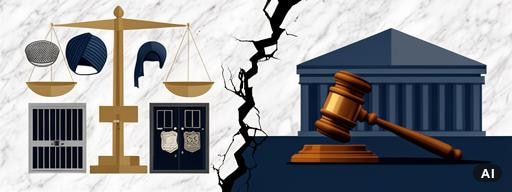
The Supreme Court of Canada ruled on 27 November that Quebec may keep Bill 21, the 2019 secularism law barring teachers, police officers, judges, government lawyers and other covered public employees from wearing religious symbols at work. Writing for the majority, Chief Justice Richard Wagner said "Bill 21 is rooted in Quebec's legitimate and historical commitment to ensuring the laicity of the state in a free and democratic society". Six of the seven judges concluded that Quebec had legitimately exercised its constitutional powers in passing the legislation. All seven agreed that the law's requirement for members of the National Assembly to perform their duties with faces uncovered infringed their democratic rights.
The judgment was celebrated in Quebec, where Premier Paul St-Pierre Plamondon had argued that the province's right to decide its own laws was at risk. Mathieu Levesque, interim leader of the Coalition Avenir Quebec, the party that passed Bill 21, called the ruling "a victory for the Quebec nation and the CAQ". Challengers dissented publicly. Stephen Brown, chief executive of the National Council of Canadian Muslims, said the court had granted "an unrestricted license for every government in this country to pass legislation taking away the fundamental freedoms and the legal rights of every Canadian"; Amira Elghawaby, a former special representative on combatting Islamophobia, called the verdict "devastating". Joe Ortona of the English Montreal School Board told BBC News Russian that the board was deeply upset and had expected a different result.
The judgment addresses how far a legislature can insulate a law from the Charter. The court held that the override is "not subject to any limit other than those expressly set out in the provision's text", and in a 4-3 split endorsed the power of courts to declare a law inconsistent with the Charter even while it remains in force, though it issued no such declaration here. Justices Andromache Karakatsanis, Michelle O'Bonsawin and Nicholas Kasirer wrote in dissent that the clause "cannot be used to authorize laws that are incompatible with the fundamental character of Canada". The court also rejected claims that Bill 21 breached the minority-language education rights of Quebec's English-speaking community, and found that section 28 does not create a distinct right on which the law could be challenged. Alberta, Saskatchewan and Ontario have invoked the same provision in recent years.
Prime Minister Mark Carney said his government respected the court's independence and was reviewing the decision, describing Canada as "a mosaic" and saying Ottawa would not use a constitutional provision that allows authorities to violate fundamental rights. Attention now turns to Premier Plamondon's stated aim of extending restrictions on religious symbols to schoolchildren, and to a separate law passed in Quebec this year extending secularity rules to subsidised preschools, higher and vocational institutions and restricting public prayers. On the same day, an appeal was to be heard over a Superior Court ruling requiring members of the National Assembly to swear allegiance to the King; the political analyst Raphaël Melançon told CTV News this could trigger "an even bigger constitutional crisis". The NCCM said its campaign would continue by other means.
The Divergence across 8 points of view
- Critical: PALESTINESE, TUR, Other sources, GLF
- Neutral: ATL, LAT, CIN, IND
- Favorable: no bloc
- Pale: the bloc has no reading of this story
Bloc by bloc, from the most critical to the most favourable
PALESTINESECritical
Reading
Rights organizations speak for Muslim women and minorities, describing state-level discrimination, while the court and Quebec’s government justify laicity as neutrality.
Description
The ruling is presented as a legal victory for Quebec that leaves Muslim women and other minorities exposed to discrimination, with rights groups warning that rights protections are weakened nationwide. The court’s laicity reasoning and the single exception for elected officials are reported, but the human cost dominates. The decision is placed in Canada’s debate over identity, secularism and minority rights.
Mechanismhuman-cost foregrounding
The legal victory is subordinated to the testimony of those excluded from jobs and public life, so laicity reads as a cover for discrimination.
TUR Turkish pressCritical
Reading
A Muslim civil-rights leader speaks in alarm about a historic setback, while the court’s laicity reasoning and federal reactions are reported as secondary context.
Description
The ruling is a major setback for religious freedom and equality, with a Muslim leader warning that the floodgates are open for governments to override charter rights. It is described as a sombre day for Quebec and Canada, while the court’s laicity rationale and the single exception for elected officials are noted. The story stresses wider rights consequences beyond Quebec.
Mechanismalarmist metaphor
A single alarmed voice and vivid metaphors—floodgates, an unrestricted license—turn a legal ruling into a nationwide threat to rights.
The outlets in this area do not agree with one another.
Other sourcesCritical
Reading
Critics of Bill 21 speak through those affected: Muslim women, civil-liberties advocates and former rights officials describe a broken promise and a dangerous precedent.
Description
The ruling is treated as a blow to religious freedom and to Muslim women in Quebec, with critics calling it devastating and warning of wider erosion of rights. The notwithstanding clause is explained as a technical shield whose effect is discriminatory. Quebec sovereignty and federal unity form the background to the decision.
Mechanismharm-led critique
Concrete harms—lost jobs, women considering leaving the province, a broken charter promise—are set beside the legal technicality, making the override look like a shield for discrimination.
The outlets in this area do not agree with one another.
GLF Arab Gulf pressCritical
Reading
Rights advocates and constitutional scholars warn of discrimination and a weakened charter, while Quebec’s laicity defense is reported as the government’s rationale.
Description
The ruling is a political victory for Quebec’s sovereigntist government that also raises alarms for Muslim women and minorities, with critics warning of a wider license to override rights. The report gives space to the court’s laicity reasoning and to constitutional-law concerns about the notwithstanding clause. Quebec’s French-speaking identity and federal unity frame the stakes.
Mechanismrights-impact contrast
The text pairs the court’s laicity language with warnings about vulnerable minorities, so the legal victory is read through its unequal impact.
ATL Atlantic / Anglosphere pressNeutral
Reading
Legal analysts and political reporters explain the court’s reasoning while letting rights advocates and Quebec’s premier claim the constitutional stakes; the tone stays informed rather than partisan.
Description
The ruling is handled as a high-stakes constitutional test, with the court’s reasoning and the scope of the notwithstanding clause explained alongside reactions from rights groups and Quebec’s government. The outcome is both a political win for Quebec and a warning about minority rights and federal unity. Legal procedure and national implications dominate.
Mechanismbalanced legal analysis
The piece balances legal doctrine, dissent and political reaction, so the ruling appears consequential rather than simply right or wrong.
LAT Latin American pressNeutral
Reading
The court and Quebec’s government defend laicity and neutrality, while religious minorities and civil-liberties groups describe discrimination; the account keeps a measured distance.
Description
The ruling is a historic but controversial validation of Quebec’s laicity law, with the court also striking down the face-covering rule for provincial legislators. The report explains the notwithstanding clause and notes criticism from religious minorities alongside Quebec’s neutrality defense. It places the case in a longer battle over rights and identity.
Mechanismmeasured institutional explanation
Institutional language and a mix of court rationale and minority criticism keep the story in a measured, explanatory register.
CIN Chinese pressNeutral
Reading
Rights groups speak for affected Muslim women, while Quebec’s sovereigntist win is recorded as a power calculation.
Description
The ruling is a compact news update: the ban stays, rights groups warn it targets Muslim women, and the decision is a political win for Quebec’s sovereigntist government that may complicate federal unity. The legal and constitutional details are kept brief.
Mechanismcompressed balance
Brevity and balance do the work: a warning, a political consequence and a legal fact are packed into a few lines, so the story reads as a strategic update.
IND Indian & South Asian pressNeutral
Reading
Legal reporters walk through the ruling’s clauses, while minority advocates and school-board critics state their objections; the account stays procedural and multi-sourced.
Description
The ruling is explained through its legal mechanics: the notwithstanding clause is valid, most of Bill 21 stands, and only the face-covering rule for elected members falls. Coverage notes Sikh turbans, Muslim hijabs and Christian crosses, and includes minority-rights objections without turning the story into a rights campaign. The wider constitutional precedent for other provinces is part of the frame.
Mechanismprocedural legal inventory
Clause-by-clause legal exposition, including the one invalid provision and the rejected minority-language claim, makes the outcome seem technical rather than emotional.
This story appeared in
🇬🇧United Kingdom4
🇨🇦Canada2
🇮🇳India2
🇹🇷Türkiye2
🇭🇰Hong Kong SAR China1
🇵🇰Pakistan1
🇵🇷Puerto Rico1
🇵🇸Palestinian Territories1
🇸🇦Saudi Arabia1
🇺🇸United States1
On the same topic
Broaden your view
Quebec Religious Symbols Ban Survives Charter Test as Assembly Face-Covering Rule Falls
Canada's Supreme Court confirms Bill 21 and Quebec's pre-emptive use of the notwithstanding clause, while dissenters warn the override cannot authorise laws at odds with the country's democratic character.
The Supreme Court of Canada ruled on 27 November that Quebec may keep Bill 21, the 2019 secularism law barring teachers, police officers, judges, government lawyers and other covered public employees from wearing religious symbols at work. Writing for the majority, Chief Justice Richard Wagner said "Bill 21 is rooted in Quebec's legitimate and historical commitment to ensuring the laicity of the state in a free and democratic society". Six of the seven judges concluded that Quebec had legitimately exercised its constitutional powers in passing the legislation. All seven agreed that the law's requirement for members of the National Assembly to perform their duties with faces uncovered infringed their democratic rights.
The judgment was celebrated in Quebec, where Premier Paul St-Pierre Plamondon had argued that the province's right to decide its own laws was at risk. Mathieu Levesque, interim leader of the Coalition Avenir Quebec, the party that passed Bill 21, called the ruling "a victory for the Quebec nation and the CAQ". Challengers dissented publicly. Stephen Brown, chief executive of the National Council of Canadian Muslims, said the court had granted "an unrestricted license for every government in this country to pass legislation taking away the fundamental freedoms and the legal rights of every Canadian"; Amira Elghawaby, a former special representative on combatting Islamophobia, called the verdict "devastating". Joe Ortona of the English Montreal School Board told BBC News Russian that the board was deeply upset and had expected a different result.
The judgment addresses how far a legislature can insulate a law from the Charter. The court held that the override is "not subject to any limit other than those expressly set out in the provision's text", and in a 4-3 split endorsed the power of courts to declare a law inconsistent with the Charter even while it remains in force, though it issued no such declaration here. Justices Andromache Karakatsanis, Michelle O'Bonsawin and Nicholas Kasirer wrote in dissent that the clause "cannot be used to authorize laws that are incompatible with the fundamental character of Canada". The court also rejected claims that Bill 21 breached the minority-language education rights of Quebec's English-speaking community, and found that section 28 does not create a distinct right on which the law could be challenged. Alberta, Saskatchewan and Ontario have invoked the same provision in recent years.
Prime Minister Mark Carney said his government respected the court's independence and was reviewing the decision, describing Canada as "a mosaic" and saying Ottawa would not use a constitutional provision that allows authorities to violate fundamental rights. Attention now turns to Premier Plamondon's stated aim of extending restrictions on religious symbols to schoolchildren, and to a separate law passed in Quebec this year extending secularity rules to subsidised preschools, higher and vocational institutions and restricting public prayers. On the same day, an appeal was to be heard over a Superior Court ruling requiring members of the National Assembly to swear allegiance to the King; the political analyst Raphaël Melançon told CTV News this could trigger "an even bigger constitutional crisis". The NCCM said its campaign would continue by other means.
The Divergence across 8 points of view
- Critical: PALESTINESE, TUR, Other sources, GLF
- Neutral: ATL, LAT, CIN, IND
- Favorable: no bloc
- Pale: the bloc has no reading of this story
PALESTINESECritical
Reading
Rights organizations speak for Muslim women and minorities, describing state-level discrimination, while the court and Quebec’s government justify laicity as neutrality.
Description
The ruling is presented as a legal victory for Quebec that leaves Muslim women and other minorities exposed to discrimination, with rights groups warning that rights protections are weakened nationwide. The court’s laicity reasoning and the single exception for elected officials are reported, but the human cost dominates. The decision is placed in Canada’s debate over identity, secularism and minority rights.
Mechanismhuman-cost foregrounding
The legal victory is subordinated to the testimony of those excluded from jobs and public life, so laicity reads as a cover for discrimination.
Bloc by bloc, from the most critical to the most favourable
PALESTINESECritical
Reading
Rights organizations speak for Muslim women and minorities, describing state-level discrimination, while the court and Quebec’s government justify laicity as neutrality.
Description
The ruling is presented as a legal victory for Quebec that leaves Muslim women and other minorities exposed to discrimination, with rights groups warning that rights protections are weakened nationwide. The court’s laicity reasoning and the single exception for elected officials are reported, but the human cost dominates. The decision is placed in Canada’s debate over identity, secularism and minority rights.
Mechanismhuman-cost foregrounding
The legal victory is subordinated to the testimony of those excluded from jobs and public life, so laicity reads as a cover for discrimination.
TUR Turkish pressCritical
Reading
A Muslim civil-rights leader speaks in alarm about a historic setback, while the court’s laicity reasoning and federal reactions are reported as secondary context.
Description
The ruling is a major setback for religious freedom and equality, with a Muslim leader warning that the floodgates are open for governments to override charter rights. It is described as a sombre day for Quebec and Canada, while the court’s laicity rationale and the single exception for elected officials are noted. The story stresses wider rights consequences beyond Quebec.
Mechanismalarmist metaphor
A single alarmed voice and vivid metaphors—floodgates, an unrestricted license—turn a legal ruling into a nationwide threat to rights.
The outlets in this area do not agree with one another.
Other sourcesCritical
Reading
Critics of Bill 21 speak through those affected: Muslim women, civil-liberties advocates and former rights officials describe a broken promise and a dangerous precedent.
Description
The ruling is treated as a blow to religious freedom and to Muslim women in Quebec, with critics calling it devastating and warning of wider erosion of rights. The notwithstanding clause is explained as a technical shield whose effect is discriminatory. Quebec sovereignty and federal unity form the background to the decision.
Mechanismharm-led critique
Concrete harms—lost jobs, women considering leaving the province, a broken charter promise—are set beside the legal technicality, making the override look like a shield for discrimination.
The outlets in this area do not agree with one another.
GLF Arab Gulf pressCritical
Reading
Rights advocates and constitutional scholars warn of discrimination and a weakened charter, while Quebec’s laicity defense is reported as the government’s rationale.
Description
The ruling is a political victory for Quebec’s sovereigntist government that also raises alarms for Muslim women and minorities, with critics warning of a wider license to override rights. The report gives space to the court’s laicity reasoning and to constitutional-law concerns about the notwithstanding clause. Quebec’s French-speaking identity and federal unity frame the stakes.
Mechanismrights-impact contrast
The text pairs the court’s laicity language with warnings about vulnerable minorities, so the legal victory is read through its unequal impact.
ATL Atlantic / Anglosphere pressNeutral
Reading
Legal analysts and political reporters explain the court’s reasoning while letting rights advocates and Quebec’s premier claim the constitutional stakes; the tone stays informed rather than partisan.
Description
The ruling is handled as a high-stakes constitutional test, with the court’s reasoning and the scope of the notwithstanding clause explained alongside reactions from rights groups and Quebec’s government. The outcome is both a political win for Quebec and a warning about minority rights and federal unity. Legal procedure and national implications dominate.
Mechanismbalanced legal analysis
The piece balances legal doctrine, dissent and political reaction, so the ruling appears consequential rather than simply right or wrong.
LAT Latin American pressNeutral
Reading
The court and Quebec’s government defend laicity and neutrality, while religious minorities and civil-liberties groups describe discrimination; the account keeps a measured distance.
Description
The ruling is a historic but controversial validation of Quebec’s laicity law, with the court also striking down the face-covering rule for provincial legislators. The report explains the notwithstanding clause and notes criticism from religious minorities alongside Quebec’s neutrality defense. It places the case in a longer battle over rights and identity.
Mechanismmeasured institutional explanation
Institutional language and a mix of court rationale and minority criticism keep the story in a measured, explanatory register.
CIN Chinese pressNeutral
Reading
Rights groups speak for affected Muslim women, while Quebec’s sovereigntist win is recorded as a power calculation.
Description
The ruling is a compact news update: the ban stays, rights groups warn it targets Muslim women, and the decision is a political win for Quebec’s sovereigntist government that may complicate federal unity. The legal and constitutional details are kept brief.
Mechanismcompressed balance
Brevity and balance do the work: a warning, a political consequence and a legal fact are packed into a few lines, so the story reads as a strategic update.
IND Indian & South Asian pressNeutral
Reading
Legal reporters walk through the ruling’s clauses, while minority advocates and school-board critics state their objections; the account stays procedural and multi-sourced.
Description
The ruling is explained through its legal mechanics: the notwithstanding clause is valid, most of Bill 21 stands, and only the face-covering rule for elected members falls. Coverage notes Sikh turbans, Muslim hijabs and Christian crosses, and includes minority-rights objections without turning the story into a rights campaign. The wider constitutional precedent for other provinces is part of the frame.
Mechanismprocedural legal inventory
Clause-by-clause legal exposition, including the one invalid provision and the rejected minority-language claim, makes the outcome seem technical rather than emotional.