Sign in
Edition of 10:00 CETThursday, August 6, 2026
320 outlets · 17 languages747 briefings today
Breaking
GLP-1 drugs tied to lower risks of cancer, heart attack and fracture in large observational studiesThe Lost Art of the Sobremesa: How Screens Are Reshaping Family Life and Childhood DevelopmentUkraine hits two major Russian oil refineries, Moscow says it downed 605 drones overnightGoogle’s $15bn Visakhapatnam data centre hub faces legal and street-level pushback over water and wildlifeA digital dawn: UAE leaders mark 60 years since Sheikh Zayed’s accession with online tributes and a foundation’s quiet evolutionRussian strike on Kyiv kills 17 as Ukraine’s interceptor shortage leaves it defenceless against ballistic missilesMan arrested in Stockholm archipelago after woman found dead in Värmdö homeSpain bans keeping pets on balconies and tightens breeding rules as welfare law takes effectGLP-1 drugs tied to lower risks of cancer, heart attack and fracture in large observational studiesThe Lost Art of the Sobremesa: How Screens Are Reshaping Family Life and Childhood DevelopmentUkraine hits two major Russian oil refineries, Moscow says it downed 605 drones overnightGoogle’s $15bn Visakhapatnam data centre hub faces legal and street-level pushback over water and wildlifeA digital dawn: UAE leaders mark 60 years since Sheikh Zayed’s accession with online tributes and a foundation’s quiet evolutionRussian strike on Kyiv kills 17 as Ukraine’s interceptor shortage leaves it defenceless against ballistic missilesMan arrested in Stockholm archipelago after woman found dead in Värmdö homeSpain bans keeping pets on balconies and tightens breeding rules as welfare law takes effect
Science & HealthWednesday, July 1, 2026

Fossil rediscoveries and anatomical scans redraw dinosaur dispersal and turtle origins

A vertebra misidentified for decades, a pterosaur wing from Egypt, and high-resolution scans of 226 specimens are together reshaping views of prehistoric life across Gondwana and the reptile family tree.

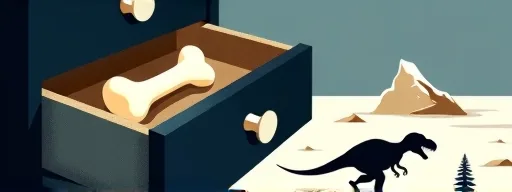
A fossil collected in Antarctica in 1985 and stored as a marine reptile vertebra has been reclassified as the first dinosaur bone ever found on the continent. The specimen, a caudal vertebra from a titanosaur, was identified by researchers at the Natural History Museum, London, and the British Antarctic Survey after collection manager Mark Evans retrieved it from a drawer. The bone, roughly 10 cm across, belonged to a juvenile or small adult sauropod that lived about 82 million years ago, when the Antarctic Peninsula was covered in temperate forest and still connected to South America and Australia. The finding, described in Acta Palaeontologica Polonica, fills a biogeographic gap: titanosaurs are well known from South America but had only scant evidence in New Zealand and none in Australia, making the Antarctic corridor a plausible dispersal route.

Separately, a team led by the American Museum of Natural History has challenged the long-standing hypothesis that turtles descend from Eunotosaurus africanus, a Permian reptile with broad ribs. Using high-resolution CT scans of 226 fossil specimens, the researchers found that the earliest turtles share key anatomical traits with archosauromorphs—the group that includes crocodiles, birds, and dinosaurs—rather than with Eunotosaurus. The traits include a bone connecting the braincase to the skull roof, a curved fifth metatarsal, and a free, rod-like stapes in the ear. The study, published in Current Biology, interprets the wide ribs of Eunotosaurus as a convergent adaptation for burrowing, not a precursor to the turtle shell. The conclusion repositions turtles within the archosauromorph radiation that followed the Permian-Triassic mass extinction, though some vertebrate palaeontologists in Denver and New Mexico say the debate is not settled.

A third discovery extends the known range of flying reptiles. Egyptian and American researchers have documented the first confirmed pterosaur fossil from Egypt, a wing bone from the Bahariya Oasis dating to more than 95 million years ago. The specimen, with an estimated wingspan of about four metres, adds a canopy-level predator to an ecosystem already known for Spinosaurus and other large dinosaurs. The Bahariya Formation’s original fossil collections were largely destroyed during the Second World War, so the new find, published in Acta Palaeontologica Polonica, helps reconstruct a lost assemblage. Viewed from Mansoura University, where the Salam Lab team is based, the discovery fills a critical gap in the record of pterosaurs across North Africa.

Together, the findings illustrate how museum collections, field surveys in under-explored regions, and advanced imaging are recalibrating narratives of prehistoric life. The Antarctic vertebra underscores the value of re-examining legacy specimens; the turtle study shows how anatomical data can overturn genetic assumptions; and the Egyptian pterosaur demonstrates that even well-known fossil sites can yield first records. The next milestones to watch include further Antarctic prospecting as ice retreat exposes new surfaces, and additional archosauromorph fossils that could test the turtle-origin hypothesis.

Breaking
GLP-1 drugs tied to lower risks of cancer, heart attack and fracture in large observational studies·The Lost Art of the Sobremesa: How Screens Are Reshaping Family Life and Childhood Development·Ukraine hits two major Russian oil refineries, Moscow says it downed 605 drones overnight·Google’s $15bn Visakhapatnam data centre hub faces legal and street-level pushback over water and wildlife·A digital dawn: UAE leaders mark 60 years since Sheikh Zayed’s accession with online tributes and a foundation’s quiet evolution·Russian strike on Kyiv kills 17 as Ukraine’s interceptor shortage leaves it defenceless against ballistic missiles·Man arrested in Stockholm archipelago after woman found dead in Värmdö home·Spain bans keeping pets on balconies and tightens breeding rules as welfare law takes effect·GLP-1 drugs tied to lower risks of cancer, heart attack and fracture in large observational studies·The Lost Art of the Sobremesa: How Screens Are Reshaping Family Life and Childhood Development·Ukraine hits two major Russian oil refineries, Moscow says it downed 605 drones overnight·Google’s $15bn Visakhapatnam data centre hub faces legal and street-level pushback over water and wildlife·A digital dawn: UAE leaders mark 60 years since Sheikh Zayed’s accession with online tributes and a foundation’s quiet evolution·Russian strike on Kyiv kills 17 as Ukraine’s interceptor shortage leaves it defenceless against ballistic missiles·Man arrested in Stockholm archipelago after woman found dead in Värmdö home·Spain bans keeping pets on balconies and tightens breeding rules as welfare law takes effect·
Upd. 12:36 PM4 languages · 6 outlets
PreviousScience & HealthNext
6 outlets|4 languages|3 min read
Wednesday, July 1, 2026

Fossil rediscoveries and anatomical scans redraw dinosaur dispersal and turtle origins

A vertebra misidentified for decades, a pterosaur wing from Egypt, and high-resolution scans of 226 specimens are together reshaping views of prehistoric life across Gondwana and the reptile family tree.

A fossil collected in Antarctica in 1985 and stored as a marine reptile vertebra has been reclassified as the first dinosaur bone ever found on the continent. The specimen, a caudal vertebra from a titanosaur, was identified by researchers at the Natural History Museum, London, and the British Antarctic Survey after collection manager Mark Evans retrieved it from a drawer. The bone, roughly 10 cm across, belonged to a juvenile or small adult sauropod that lived about 82 million years ago, when the Antarctic Peninsula was covered in temperate forest and still connected to South America and Australia. The finding, described in Acta Palaeontologica Polonica, fills a biogeographic gap: titanosaurs are well known from South America but had only scant evidence in New Zealand and none in Australia, making the Antarctic corridor a plausible dispersal route.

Separately, a team led by the American Museum of Natural History has challenged the long-standing hypothesis that turtles descend from Eunotosaurus africanus, a Permian reptile with broad ribs. Using high-resolution CT scans of 226 fossil specimens, the researchers found that the earliest turtles share key anatomical traits with archosauromorphs—the group that includes crocodiles, birds, and dinosaurs—rather than with Eunotosaurus. The traits include a bone connecting the braincase to the skull roof, a curved fifth metatarsal, and a free, rod-like stapes in the ear. The study, published in Current Biology, interprets the wide ribs of Eunotosaurus as a convergent adaptation for burrowing, not a precursor to the turtle shell. The conclusion repositions turtles within the archosauromorph radiation that followed the Permian-Triassic mass extinction, though some vertebrate palaeontologists in Denver and New Mexico say the debate is not settled.

A third discovery extends the known range of flying reptiles. Egyptian and American researchers have documented the first confirmed pterosaur fossil from Egypt, a wing bone from the Bahariya Oasis dating to more than 95 million years ago. The specimen, with an estimated wingspan of about four metres, adds a canopy-level predator to an ecosystem already known for Spinosaurus and other large dinosaurs. The Bahariya Formation’s original fossil collections were largely destroyed during the Second World War, so the new find, published in Acta Palaeontologica Polonica, helps reconstruct a lost assemblage. Viewed from Mansoura University, where the Salam Lab team is based, the discovery fills a critical gap in the record of pterosaurs across North Africa.

Together, the findings illustrate how museum collections, field surveys in under-explored regions, and advanced imaging are recalibrating narratives of prehistoric life. The Antarctic vertebra underscores the value of re-examining legacy specimens; the turtle study shows how anatomical data can overturn genetic assumptions; and the Egyptian pterosaur demonstrates that even well-known fossil sites can yield first records. The next milestones to watch include further Antarctic prospecting as ice retreat exposes new surfaces, and additional archosauromorph fossils that could test the turtle-origin hypothesis.

Source divergence

Science & Health · 6 outlets · 4 languages

0%Low

How sources tell the same facts differently.

How They Split

Critical100%

This story appeared in

6 outlets · 4 languages

Broaden your view

From Geopolitics & Politics

US Officials Say Hormuz Deal Possible Within Hours as Oil Prices Tumble

6 languages · 52 outlets

From Economy & Markets

SpaceX revenue jumps 92% in first post-IPO quarter, but AI spending triggers share slide

1 language · 31 outlets

From Technology

SpaceX Falcon 9 upper stage believed to have struck the Moon

7 languages · 44 outlets

Read more