Russian Far East Tremor Divides Seismic Agencies on Strength and Depth
An intermediate-depth earthquake struck the Kamchatka Peninsula on Saturday, with monitoring services differing over its magnitude and hypocentre and no immediate reports of casualties or damage.
How they tell it
0%20 outlets · 10 languages
none critical, 9 neutral, none favorable
Read the divergences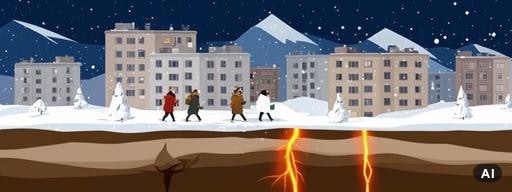
The earthquake struck the Kamchatka region of Russia's Far East at 13:15 GMT on Saturday, corresponding to 1:15 a.m. local time on 29 November, according to the regional branch of Russia's Geophysical Service. The European Mediterranean Seismological Centre and the United States Geological Survey both put the magnitude at 6.7, while the Russian service recorded 6.2. The accounts available did not explain the divergence.
Depths varied between agencies. The Russian service reported 189.1 km and the USGS 188.4 km, while India's National Centre for Seismology gave 205 km and Indonesia's meteorological agency, BMKG, 180 km. Greek outlets citing the EMSC reported 220 km, whereas a Reuters figure carried by CNN Indonesia put the EMSC depth at 188 km. Epicentral coordinates also differed: BMKG placed the event at 53.91 degrees north and 157.80 east, the USGS at 53.719 north and 158.079 east, and the NCS at 53.667 north and 158.030 east. Wording varied on whether the rupture lay inland or near the coast; the USGS located it about 62 km north-north-west of Yelizovo and the Russian service 72 km from Petropavlovsk-Kamchatsky.
No immediate reports of casualties or structural damage had emerged by Saturday evening. The Russian service estimated the shaking at intensity 3 in Petropavlovsk-Kamchatsky. Tass, cited by Anadolu Agency, reported that the nighttime quake woke residents and that many left their apartments despite a blizzard. BMKG said it had recorded no aftershocks as of 21:00 Jakarta time. Indonesia's BMKG, the Philippines' Phivolcs and Peruvian monitoring information each stated that the event would not generate a tsunami on their coasts.
BMKG described the rupture as intermediate-depth thrust faulting within the Pacific Plate beneath the Okhotsk Plate. Indian monitoring reports noted that the USGS and NCS depth estimates both fall in the intermediate range, a category that typically produces weaker surface shaking than shallow events of comparable magnitude. Kamchatka lies on the Pacific Ring of Fire; an 8.8-magnitude earthquake struck off its east coast on 30 July 2025 at a depth of about 35 km, generating tsunami alerts across the Pacific, including in Japan, Hawaii and Chile.
Assessments of Saturday's event remain provisional, with no confirmed damage or injury reports and no indication that the discrepancy between agency readings has been resolved.
The Divergence across 9 points of view
- Critical: no bloc
- Neutral: EUR, RUS, IRN, ISR, GLF, TUR, IND, SEA, LAT
- Favorable: no bloc
- Pale: the bloc has no reading of this story
Bloc by bloc, from the most critical to the most favourable
EUR Continental European pressNeutral
Reading
The seismological data carry the account: magnitude 6.7, depth of about 220 km, and no indication of immediate impact.
Description
A magnitude 6.7 quake struck the east coast of Kamchatka according to the Euro-Mediterranean seismological centre, with a hypocenter about 220 km deep. The account stays brief: location, time and the geographic context of a volcanic peninsula between the Sea of Okhotsk and the Pacific; no damage or casualties are reported.
Mechanismdata anchoring
The frame is built by stacking verifiable parameters and geographic context, without attributing intentions or alarms.
RUS Russian & CIS pressNeutral
Reading
The Russian official source gives magnitude 6.2 and an onshore epicentre: the fact is logged without alarm.
Description
A short agency dispatch reports a felt nighttime earthquake in Kamchatka, magnitude 6.2 with an onshore epicentre, citing the Russian state news agency. It offers no damage assessment, casualty report or wider context; the available text is a snippet.
Mechanismofficial relay
The account relies on the state agency relay and stays with the minimum data.
IRN Iranian & allied pressNeutral
Reading
The visual alert accompanies the data: 6.7 at 188 km, in the same belt that produced a much stronger event in 2025.
Description
A video item flags a magnitude 6.7 quake on the Kamchatka Peninsula at 188.4 km depth, in the same zone hit by a magnitude 8.8 event in July 2025. The framing is urgent news with seismic memory, without data on damage or casualties.
Mechanismprecedent recall
Comparison with the earlier 8.8 amplifies the new event’s relevance without adding confirmed damage.
ISR Israeli pressNeutral
Reading
The fact is stated plainly: 6.7 off Kamchatka, 188 km deep, from a European seismological source.
Description
A short report cites a magnitude 6.7 quake off the east coast of Kamchatka at 188 km depth, attributing the figure to the Euro-Mediterranean seismological centre. The available text is a snippet and adds no assessment of damage or casualties.
Mechanismbulletin register
Brevity and attribution to an international centre keep the account in bulletin register.
GLF Arab Gulf pressNeutral
Reading
The picture is one of measurable risk: magnitude contested between 6.2 and 6.7, no tsunami, and a low estimated humanitarian impact.
Description
The quake is read mainly as an event to assess for humanitarian impact: a Russian source gives magnitude 6.2, the global alert system 6.7, with a green alert and about 250,000 people exposed to intensity IV shaking. It states there is no tsunami threat and compares the event with the strong 2025 quake in the same area; no confirmed casualties or damage are reported.
Mechanismalert hierarchy
The hierarchy of alert sources and quantitative thresholds make the risk concrete but contained.
TUR Turkish pressNeutral
Reading
The shock is told through two magnitude scales and through residents’ night awakening.
Description
The account moves between a Russian estimate of magnitude 6.2 and a US estimate of 6.7, with depth around 188-189 km near Yelizovo. A human detail is added — residents woken at night who leave their homes despite a blizzard — while no casualties or damage are reported.
Mechanismcontrolled humanisation
The detail of people outside in the blizzard gives the event concreteness without turning it into catastrophe.
IND Indian & South Asian pressNeutral
Reading
Indian monitoring fixes magnitude and depth, while geology explains why the expected impact remains limited.
Description
The quake is reconstructed through the Indian seismological agency’s parameters, with magnitude 6.7 and an estimated depth of 205 km, alongside 188 km from the US geological service. The intermediate depth is used to explain weaker surface shaking; no casualties or damage are reported and the 2025 magnitude 8.8 precedent is recalled.
Mechanismestimate comparison
Comparison between national and US estimates builds technical authority and scales down alarm.
SEA Southeast Asian pressNeutral
Reading
Local meteorological and geological authorities certify that there is no tsunami threat for their own waters.
Description
The quake arrives through regional agencies and agency relays: one strand gives magnitude 6.7 and depth around 188 km, another takes up the Russian estimate of 6.2 at 189 km. Attention is on local safety checks — no tsunami risk for Indonesia or the Philippines — and on the absence of reported damage or aftershocks.
Mechanismnational competence filter
The news is filtered through national competences, translating the global datum into a safety check for domestic audiences.
LAT Latin American pressNeutral
Reading
Seismic risk is the lens: the Russian case remains foreign news, but for Andean audiences it recalls energy stored along their own coast.
Description
The Russian quake is described with US geological service data: magnitude 6.7, epicentre near Yelizovo, depth of 188 km and no tsunami alert for Peru. In one case the fact becomes a hook for discussing Peru’s central-coast seismic silence and the risk of a future very strong quake; in the other it sits within a global roundup of tremors.
Mechanismlocal risk shift
The shift from the Russian case to Peruvian vulnerability turns foreign news into a warning for local audiences.
The outlets in this area do not agree with one another.
This story appeared in
🇹🇷Türkiye3
🇲🇾Malaysia2
🇧🇭Bahrain1
🇮🇩Indonesia1
🇮🇱Israel1
🇮🇷Iran1
🇰🇿Kazakhstan1
🇲🇽Mexico1
Show all 20 outlets
🇵🇪Peru1
🇷🇸Serbia1
🇸🇦Saudi Arabia1
🇻🇳Vietnam1
On the same topic
Broaden your view
Russian Far East Tremor Divides Seismic Agencies on Strength and Depth
An intermediate-depth earthquake struck the Kamchatka Peninsula on Saturday, with monitoring services differing over its magnitude and hypocentre and no immediate reports of casualties or damage.
The earthquake struck the Kamchatka region of Russia's Far East at 13:15 GMT on Saturday, corresponding to 1:15 a.m. local time on 29 November, according to the regional branch of Russia's Geophysical Service. The European Mediterranean Seismological Centre and the United States Geological Survey both put the magnitude at 6.7, while the Russian service recorded 6.2. The accounts available did not explain the divergence.
Depths varied between agencies. The Russian service reported 189.1 km and the USGS 188.4 km, while India's National Centre for Seismology gave 205 km and Indonesia's meteorological agency, BMKG, 180 km. Greek outlets citing the EMSC reported 220 km, whereas a Reuters figure carried by CNN Indonesia put the EMSC depth at 188 km. Epicentral coordinates also differed: BMKG placed the event at 53.91 degrees north and 157.80 east, the USGS at 53.719 north and 158.079 east, and the NCS at 53.667 north and 158.030 east. Wording varied on whether the rupture lay inland or near the coast; the USGS located it about 62 km north-north-west of Yelizovo and the Russian service 72 km from Petropavlovsk-Kamchatsky.
No immediate reports of casualties or structural damage had emerged by Saturday evening. The Russian service estimated the shaking at intensity 3 in Petropavlovsk-Kamchatsky. Tass, cited by Anadolu Agency, reported that the nighttime quake woke residents and that many left their apartments despite a blizzard. BMKG said it had recorded no aftershocks as of 21:00 Jakarta time. Indonesia's BMKG, the Philippines' Phivolcs and Peruvian monitoring information each stated that the event would not generate a tsunami on their coasts.
BMKG described the rupture as intermediate-depth thrust faulting within the Pacific Plate beneath the Okhotsk Plate. Indian monitoring reports noted that the USGS and NCS depth estimates both fall in the intermediate range, a category that typically produces weaker surface shaking than shallow events of comparable magnitude. Kamchatka lies on the Pacific Ring of Fire; an 8.8-magnitude earthquake struck off its east coast on 30 July 2025 at a depth of about 35 km, generating tsunami alerts across the Pacific, including in Japan, Hawaii and Chile.
Assessments of Saturday's event remain provisional, with no confirmed damage or injury reports and no indication that the discrepancy between agency readings has been resolved.
The Divergence across 9 points of view
- Critical: no bloc
- Neutral: EUR, RUS, IRN, ISR, GLF, TUR, IND, SEA, LAT
- Favorable: no bloc
- Pale: the bloc has no reading of this story
EUR Continental European pressNeutral
Reading
The seismological data carry the account: magnitude 6.7, depth of about 220 km, and no indication of immediate impact.
Description
A magnitude 6.7 quake struck the east coast of Kamchatka according to the Euro-Mediterranean seismological centre, with a hypocenter about 220 km deep. The account stays brief: location, time and the geographic context of a volcanic peninsula between the Sea of Okhotsk and the Pacific; no damage or casualties are reported.
Mechanismdata anchoring
The frame is built by stacking verifiable parameters and geographic context, without attributing intentions or alarms.
Bloc by bloc, from the most critical to the most favourable
EUR Continental European pressNeutral
Reading
The seismological data carry the account: magnitude 6.7, depth of about 220 km, and no indication of immediate impact.
Description
A magnitude 6.7 quake struck the east coast of Kamchatka according to the Euro-Mediterranean seismological centre, with a hypocenter about 220 km deep. The account stays brief: location, time and the geographic context of a volcanic peninsula between the Sea of Okhotsk and the Pacific; no damage or casualties are reported.
Mechanismdata anchoring
The frame is built by stacking verifiable parameters and geographic context, without attributing intentions or alarms.
RUS Russian & CIS pressNeutral
Reading
The Russian official source gives magnitude 6.2 and an onshore epicentre: the fact is logged without alarm.
Description
A short agency dispatch reports a felt nighttime earthquake in Kamchatka, magnitude 6.2 with an onshore epicentre, citing the Russian state news agency. It offers no damage assessment, casualty report or wider context; the available text is a snippet.
Mechanismofficial relay
The account relies on the state agency relay and stays with the minimum data.
IRN Iranian & allied pressNeutral
Reading
The visual alert accompanies the data: 6.7 at 188 km, in the same belt that produced a much stronger event in 2025.
Description
A video item flags a magnitude 6.7 quake on the Kamchatka Peninsula at 188.4 km depth, in the same zone hit by a magnitude 8.8 event in July 2025. The framing is urgent news with seismic memory, without data on damage or casualties.
Mechanismprecedent recall
Comparison with the earlier 8.8 amplifies the new event’s relevance without adding confirmed damage.
ISR Israeli pressNeutral
Reading
The fact is stated plainly: 6.7 off Kamchatka, 188 km deep, from a European seismological source.
Description
A short report cites a magnitude 6.7 quake off the east coast of Kamchatka at 188 km depth, attributing the figure to the Euro-Mediterranean seismological centre. The available text is a snippet and adds no assessment of damage or casualties.
Mechanismbulletin register
Brevity and attribution to an international centre keep the account in bulletin register.
GLF Arab Gulf pressNeutral
Reading
The picture is one of measurable risk: magnitude contested between 6.2 and 6.7, no tsunami, and a low estimated humanitarian impact.
Description
The quake is read mainly as an event to assess for humanitarian impact: a Russian source gives magnitude 6.2, the global alert system 6.7, with a green alert and about 250,000 people exposed to intensity IV shaking. It states there is no tsunami threat and compares the event with the strong 2025 quake in the same area; no confirmed casualties or damage are reported.
Mechanismalert hierarchy
The hierarchy of alert sources and quantitative thresholds make the risk concrete but contained.
TUR Turkish pressNeutral
Reading
The shock is told through two magnitude scales and through residents’ night awakening.
Description
The account moves between a Russian estimate of magnitude 6.2 and a US estimate of 6.7, with depth around 188-189 km near Yelizovo. A human detail is added — residents woken at night who leave their homes despite a blizzard — while no casualties or damage are reported.
Mechanismcontrolled humanisation
The detail of people outside in the blizzard gives the event concreteness without turning it into catastrophe.
IND Indian & South Asian pressNeutral
Reading
Indian monitoring fixes magnitude and depth, while geology explains why the expected impact remains limited.
Description
The quake is reconstructed through the Indian seismological agency’s parameters, with magnitude 6.7 and an estimated depth of 205 km, alongside 188 km from the US geological service. The intermediate depth is used to explain weaker surface shaking; no casualties or damage are reported and the 2025 magnitude 8.8 precedent is recalled.
Mechanismestimate comparison
Comparison between national and US estimates builds technical authority and scales down alarm.
SEA Southeast Asian pressNeutral
Reading
Local meteorological and geological authorities certify that there is no tsunami threat for their own waters.
Description
The quake arrives through regional agencies and agency relays: one strand gives magnitude 6.7 and depth around 188 km, another takes up the Russian estimate of 6.2 at 189 km. Attention is on local safety checks — no tsunami risk for Indonesia or the Philippines — and on the absence of reported damage or aftershocks.
Mechanismnational competence filter
The news is filtered through national competences, translating the global datum into a safety check for domestic audiences.
LAT Latin American pressNeutral
Reading
Seismic risk is the lens: the Russian case remains foreign news, but for Andean audiences it recalls energy stored along their own coast.
Description
The Russian quake is described with US geological service data: magnitude 6.7, epicentre near Yelizovo, depth of 188 km and no tsunami alert for Peru. In one case the fact becomes a hook for discussing Peru’s central-coast seismic silence and the risk of a future very strong quake; in the other it sits within a global roundup of tremors.
Mechanismlocal risk shift
The shift from the Russian case to Peruvian vulnerability turns foreign news into a warning for local audiences.
The outlets in this area do not agree with one another.