Fourteen bodies landed at El Hierro after rescue of crowded Atlantic migrant boat
Accounts agree on 14 dead and 84 survivors put ashore at La Restinga, but differ on whether those survivors arrived on the same vessel and whether anyone remains missing.
How they tell it
10%47 outlets · 17 languages
7 critical, 6 neutral, none favorable
Read the divergences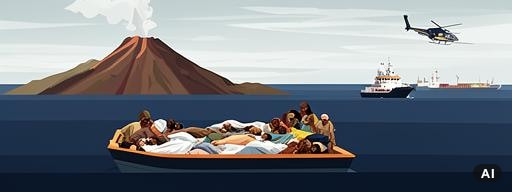
Fourteen people were found dead aboard a boat carrying about 100 migrants that was rescued south of El Hierro in Spain's Canary Islands, according to the Spanish news agency EFE. The bodies were brought ashore, the agency reported, after the maritime rescue service had initially said that between eight and 10 were on board.
Six survivors, five men and one woman, were airlifted to hospital on El Hierro in a serious condition, according to accounts citing emergency sources. Eighty-four others disembarked at the island's La Restinga port, where a migrant reception centre and field hospital process most arrivals. Several of those rescued were reported to be suffering from dehydration and hypothermia, and some were unable to stand.
Accounts diverge on the movement of the vessel. Most, including EFE, Deutsche Welle and ORF, place the tow at the port of La Estaca, while Pajhwok and Arabic-language reports carried by WAFA and Shehab say the boat was taken to La Restinga with the bodies aboard. Reports also differ on whether the 84 survivors reached La Restinga on the same vessel or a separate one. On the toll, Deutsche Welle reported that no one was listed missing and noted that the newspaper El País had put the figure at 15, while Al-Quds said others were missing.
Spain's minister for territorial policy, Ángel Víctor Torres, said on Saturday that 14 migrants had been confirmed dead, in a post on X reported by La Libre Belgique and by Arabic-language outlets including Hespress and Sky News Arabia. Survivors said the boat left Banjul in Gambia about ten days earlier, and preliminary indications pointed to an engine failure three days before it was found, around 39 nautical miles, or 72km, south of El Hierro. The regional leader, Fernando Clavijo, spoke of "a lot of pain and feeling of impotence", and said the humanitarian emergency "doesn't start on El Hierro, but on the shores of Senegal and Gambia". Arrivals to the Canaries reached a record 2,100 in a single day on 25 November, most of them to El Hierro, whose population is about 12,000; authorities declared a state of emergency there in early November. The toll remains provisional.
The Divergence across 13 points of view
- Critical: AFR, ALM, LAT, GLF, RUS, TUR, PALESTINESE
- Neutral: ATL, GIAPPONE_COREA_TAIWAN, EUR, SEA, IND, CIN
- Favorable: no bloc
- Pale: the bloc has no reading of this story
Bloc by bloc, from the most critical to the most favourable
AFR Sub-Saharan African pressCritical
Reading
The account follows the route from the departure shore: Gambia, Senegal, the October departures, and tells the shipwreck as the last link in a chain that begins well before El Hierro.
Description
The account starts from the point of departure: a pirogue that left Gambia ten days earlier with about a hundred people on board, intercepted 72 km from El Hierro. The provisional toll moves between eight and ten bodies, then rises, and survivors are described disembarking at La Restinga on stretchers or wrapped in thermal blankets. The tragedy is placed within an acceleration of departures towards the Canaries since late October, with the Spanish rescue service as the main source.
Mechanismrescue-source anchoring
The Spanish rescue service and a migration-specialist outlet are used as the primary source, while the toll is presented as still provisional and evolving.
ALM Arab Levant-Maghreb pressCritical
Reading
The account holds together the rising death toll and the Spanish electoral calendar, and relays the call to act on the countries of departure.
Description
The toll is updated to fourteen dead after more bodies are found, while survivors are disembarked at La Restinga. The case is placed days before Spain's general election, with immigration as a central campaign issue. The Canary Islands regional president's call to act at the source, on the coasts of Senegal and Gambia, is carried.
Mechanismelectoral hook
The progressive updating of the toll and the hook to the election campaign build a sense of political urgency.
LAT Latin American pressCritical
Reading
The account entrusts the Spanish minister with confirming the toll and the line about migrants' desperation, and closes on the Spanish electoral picture.
Description
The toll rises to fourteen dead and the Spanish minister for territorial policy confirms the figure, expressing condolences. The line about migrants not boarding a cayuco for fun but out of desperation is carried. The case is placed on the eve of Spain's general election, with polls favouring the right and possible deals with the far right.
Mechanismmoral quotation
The institutional quotation and the appeal to desperation as motive shift the account onto a moral plane, without direct commentary from the outlet.
GLF Arab Gulf pressCritical
Reading
The account reconstructs the crossing as a technical sequence of breakdown, drifting and rescue, and places the case within the Spanish political debate without taking sides.
Description
The shipwreck is reconstructed from the route: departure from Banjul ten days earlier, engine failure three days before the sighting, rescue with vessels and a helicopter. The toll is fourteen dead and eighty-four survivors taken to La Restinga. In the background, the Spanish political clash over immigration close to the vote and the contrast between openness and tighter controls.
Mechanismsequential reconstruction
The step-by-step reconstruction of the voyage and the use of Spanish agencies as sources keep the account on the plane of verifiable facts.
RUS Russian & CIS pressCritical
Reading
The account foregrounds the irregular-entry figures and the Spanish prime minister's reading of flows as a threat to territorial integrity, alongside the account of the shipwreck.
Description
The toll rises to fourteen dead and the vessel is taken to La Restinga; six people in serious condition are airlifted out. The piece cites the Canary Islands regional president's call to act on the coasts of Senegal and Gambia, and recalls the Spanish prime minister's position on illegal flows as a threat to territorial integrity. Spanish interior ministry data on irregular entries complete the picture.
Mechanismshift to the flow picture
Pairing the human toll with statistical data on entries shifts the centre of gravity from the single tragedy to the overall picture of flows.
TUR Turkish pressCritical
Reading
The account reconstructs the crossing and the rescue and supports the story with official Spanish data on sea arrivals.
Description
The shipwreck is reconstructed with the route from Banjul, the engine failure and the rescue with vessels and a helicopter. The toll is fourteen dead and ninety saved, with six seriously injured taken to hospital. Spanish interior ministry data on irregular sea arrivals and the share reaching the Canaries are carried.
Mechanismtechnical sequence
The technical sequence of events and the use of ministry data keep the piece on an informational register.
PALESTINESECritical
Reading
The account reports the toll and the survivors' condition, and frames the Atlantic route as one of the world's most dangerous.
Description
The shipwreck is reported with a toll of fourteen dead and ninety saved, after ten days of navigation from Gambia. Details on the seriously injured airlifted to hospital and on survivors with dehydration and hypothermia are carried. The Atlantic route to the Canaries is described as one of the most dangerous because of the length of crossings and sea conditions.
Mechanismclinical description
The description of survivors' medical condition and the qualification of the route build the picture without direct commentary.
ATL Atlantic / Anglosphere pressNeutral
Reading
The account places the shipwreck within the Spanish electoral frame and lets the regional president and the clash between the prime minister and the right set the political tone.
Description
The toll of fourteen dead is reported as the boat is towed to La Estaca and survivors disembark at La Restinga. The case is placed days before Spain's general election, with immigration as a defining campaign issue. The Canary Islands regional president's call to act on the coasts of Senegal and Gambia is carried, along with the contrast between the Spanish prime minister and the right over controls.
Mechanismelectoral framing
The hook to Sunday's vote and the quotation of opposing positions turn the event into a political case without taking a side.
GIAPPONE_COREA_TAIWANNeutral
Reading
The account places the shipwreck within the Spanish electoral frame and describes the emergency on the island with arrival figures and deployed resources.
Description
The shipwreck is placed on the eve of Spain's general election, with immigration as a central campaign issue. The record arrival figures and the emergency declared on the island are carried, along with military deployment and temporary medical posts. The Spanish political contrast between the prime minister and the right over controls completes the picture.
Mechanismelectoral framing
The hook to the vote and the description of emergency measures build a sense of urgency without taking sides.
EUR Continental European pressNeutral
Reading
The account lines up the arrival figures and the preceding weeks, and lets the regional president be the one to demand action from Madrid and Brussels.
Description
The toll rises to fourteen dead as the boat is towed to La Estaca and survivors disembark at La Restinga. The frame widens immediately to the preceding weeks: record arrivals, a state of emergency declared in early November, island facilities under pressure. The voice of the Canary Islands regional president calls for action from Madrid and the European Commission, with the Spanish election campaign in the background.
Mechanismchronological accumulation
The chronological sequence of arrivals and the quoted institutional request build urgency without taking a partisan stance.
SEA Southeast Asian pressNeutral
Reading
The account reports the numbers and the rescue operations in wire-service tone, without adding a political reading of its own.
Description
The event is reported with the essential numbers: fourteen dead, about a hundred people on board, eighty-four survivors, six seriously injured airlifted to hospital. The boat, found 72 km south of El Hierro, is towed to La Estaca. The context is the rise in arrivals and the emergency declared on the island, with the Spanish vote in the background.
Mechanismnumeric dispatch
Reliance on compact figures and agency sources keeps the piece on a descriptive, verifiable register.
IND Indian & South Asian pressNeutral
Reading
The account reports the event with the numbers and the route, and leans on agencies for the context of record arrivals.
Description
The discovery of the bodies and the rescue of about ninety people are reported with the essential numbers and the departure route from Banjul. The record arrivals figure of 25 November and the classification of the Atlantic route as one of the world's most dangerous are carried. The piece stays on the plane of reporting, with Spanish agencies and Reuters as sources.
Mechanismagency synthesis
The synthesis of essential data and the reference to agency sources keep the piece on an informational register.
CIN Chinese pressNeutral
Reading
The account reports the numbers and the Canary Islands authorities' request to Madrid and Brussels, without adding a political reading of its own.
Description
The event is reported with the essential numbers: fourteen dead, eighty-four survivors, six seriously injured airlifted to hospital. The boat had left Gambia and spent about ten days at sea. Pressure on the island's reception facilities and the Canary Islands government's call to Madrid and the European Union are carried.
Mechanisminstitutional synthesis
The synthesis of essential data and the reference to the institutional request keep the piece on a descriptive register.
This story appeared in
🇵🇸Palestinian Territories3
🇦🇪United Arab Emirates2
🇧🇩Bangladesh2
🇮🇳India2
🇲🇾Malaysia2
🇷🇺Russia2
🇦🇫Afghanistan1
Show all 47 outlets
🇦🇹Austria1
🇧🇪Belgium1
🇧🇷Brazil1
🇨🇭Switzerland1
🇨🇳China1
🇨🇾Cyprus1
🇩🇪Germany1
🇪🇸Spain1
🇫🇷France1
🇬🇷Greece1
🇭🇰Hong Kong SAR China1
🇭🇷Croatia1
🇮🇩Indonesia1
🇮🇪Ireland1
🇮🇹Italy1
🇱🇹Lithuania1
🇱🇺Luxembourg1
🇲🇽Mexico1
🇳🇵Nepal1
🇵🇭Philippines1
🇵🇾Paraguay1
🇸🇦Saudi Arabia1
🇸🇳Senegal1
🇸🇾Syria1
🇹🇼Taiwan1
🇻🇪Venezuela1
On the same topic
Broaden your view
Fourteen bodies landed at El Hierro after rescue of crowded Atlantic migrant boat
Accounts agree on 14 dead and 84 survivors put ashore at La Restinga, but differ on whether those survivors arrived on the same vessel and whether anyone remains missing.
Fourteen people were found dead aboard a boat carrying about 100 migrants that was rescued south of El Hierro in Spain's Canary Islands, according to the Spanish news agency EFE. The bodies were brought ashore, the agency reported, after the maritime rescue service had initially said that between eight and 10 were on board.
Six survivors, five men and one woman, were airlifted to hospital on El Hierro in a serious condition, according to accounts citing emergency sources. Eighty-four others disembarked at the island's La Restinga port, where a migrant reception centre and field hospital process most arrivals. Several of those rescued were reported to be suffering from dehydration and hypothermia, and some were unable to stand.
Accounts diverge on the movement of the vessel. Most, including EFE, Deutsche Welle and ORF, place the tow at the port of La Estaca, while Pajhwok and Arabic-language reports carried by WAFA and Shehab say the boat was taken to La Restinga with the bodies aboard. Reports also differ on whether the 84 survivors reached La Restinga on the same vessel or a separate one. On the toll, Deutsche Welle reported that no one was listed missing and noted that the newspaper El País had put the figure at 15, while Al-Quds said others were missing.
Spain's minister for territorial policy, Ángel Víctor Torres, said on Saturday that 14 migrants had been confirmed dead, in a post on X reported by La Libre Belgique and by Arabic-language outlets including Hespress and Sky News Arabia. Survivors said the boat left Banjul in Gambia about ten days earlier, and preliminary indications pointed to an engine failure three days before it was found, around 39 nautical miles, or 72km, south of El Hierro. The regional leader, Fernando Clavijo, spoke of "a lot of pain and feeling of impotence", and said the humanitarian emergency "doesn't start on El Hierro, but on the shores of Senegal and Gambia". Arrivals to the Canaries reached a record 2,100 in a single day on 25 November, most of them to El Hierro, whose population is about 12,000; authorities declared a state of emergency there in early November. The toll remains provisional.
The Divergence across 13 points of view
- Critical: AFR, ALM, LAT, GLF, RUS, TUR, PALESTINESE
- Neutral: ATL, GIAPPONE_COREA_TAIWAN, EUR, SEA, IND, CIN
- Favorable: no bloc
- Pale: the bloc has no reading of this story
AFR Sub-Saharan African pressCritical
Reading
The account follows the route from the departure shore: Gambia, Senegal, the October departures, and tells the shipwreck as the last link in a chain that begins well before El Hierro.
Description
The account starts from the point of departure: a pirogue that left Gambia ten days earlier with about a hundred people on board, intercepted 72 km from El Hierro. The provisional toll moves between eight and ten bodies, then rises, and survivors are described disembarking at La Restinga on stretchers or wrapped in thermal blankets. The tragedy is placed within an acceleration of departures towards the Canaries since late October, with the Spanish rescue service as the main source.
Mechanismrescue-source anchoring
The Spanish rescue service and a migration-specialist outlet are used as the primary source, while the toll is presented as still provisional and evolving.
Bloc by bloc, from the most critical to the most favourable
AFR Sub-Saharan African pressCritical
Reading
The account follows the route from the departure shore: Gambia, Senegal, the October departures, and tells the shipwreck as the last link in a chain that begins well before El Hierro.
Description
The account starts from the point of departure: a pirogue that left Gambia ten days earlier with about a hundred people on board, intercepted 72 km from El Hierro. The provisional toll moves between eight and ten bodies, then rises, and survivors are described disembarking at La Restinga on stretchers or wrapped in thermal blankets. The tragedy is placed within an acceleration of departures towards the Canaries since late October, with the Spanish rescue service as the main source.
Mechanismrescue-source anchoring
The Spanish rescue service and a migration-specialist outlet are used as the primary source, while the toll is presented as still provisional and evolving.
ALM Arab Levant-Maghreb pressCritical
Reading
The account holds together the rising death toll and the Spanish electoral calendar, and relays the call to act on the countries of departure.
Description
The toll is updated to fourteen dead after more bodies are found, while survivors are disembarked at La Restinga. The case is placed days before Spain's general election, with immigration as a central campaign issue. The Canary Islands regional president's call to act at the source, on the coasts of Senegal and Gambia, is carried.
Mechanismelectoral hook
The progressive updating of the toll and the hook to the election campaign build a sense of political urgency.
LAT Latin American pressCritical
Reading
The account entrusts the Spanish minister with confirming the toll and the line about migrants' desperation, and closes on the Spanish electoral picture.
Description
The toll rises to fourteen dead and the Spanish minister for territorial policy confirms the figure, expressing condolences. The line about migrants not boarding a cayuco for fun but out of desperation is carried. The case is placed on the eve of Spain's general election, with polls favouring the right and possible deals with the far right.
Mechanismmoral quotation
The institutional quotation and the appeal to desperation as motive shift the account onto a moral plane, without direct commentary from the outlet.
GLF Arab Gulf pressCritical
Reading
The account reconstructs the crossing as a technical sequence of breakdown, drifting and rescue, and places the case within the Spanish political debate without taking sides.
Description
The shipwreck is reconstructed from the route: departure from Banjul ten days earlier, engine failure three days before the sighting, rescue with vessels and a helicopter. The toll is fourteen dead and eighty-four survivors taken to La Restinga. In the background, the Spanish political clash over immigration close to the vote and the contrast between openness and tighter controls.
Mechanismsequential reconstruction
The step-by-step reconstruction of the voyage and the use of Spanish agencies as sources keep the account on the plane of verifiable facts.
RUS Russian & CIS pressCritical
Reading
The account foregrounds the irregular-entry figures and the Spanish prime minister's reading of flows as a threat to territorial integrity, alongside the account of the shipwreck.
Description
The toll rises to fourteen dead and the vessel is taken to La Restinga; six people in serious condition are airlifted out. The piece cites the Canary Islands regional president's call to act on the coasts of Senegal and Gambia, and recalls the Spanish prime minister's position on illegal flows as a threat to territorial integrity. Spanish interior ministry data on irregular entries complete the picture.
Mechanismshift to the flow picture
Pairing the human toll with statistical data on entries shifts the centre of gravity from the single tragedy to the overall picture of flows.
TUR Turkish pressCritical
Reading
The account reconstructs the crossing and the rescue and supports the story with official Spanish data on sea arrivals.
Description
The shipwreck is reconstructed with the route from Banjul, the engine failure and the rescue with vessels and a helicopter. The toll is fourteen dead and ninety saved, with six seriously injured taken to hospital. Spanish interior ministry data on irregular sea arrivals and the share reaching the Canaries are carried.
Mechanismtechnical sequence
The technical sequence of events and the use of ministry data keep the piece on an informational register.
PALESTINESECritical
Reading
The account reports the toll and the survivors' condition, and frames the Atlantic route as one of the world's most dangerous.
Description
The shipwreck is reported with a toll of fourteen dead and ninety saved, after ten days of navigation from Gambia. Details on the seriously injured airlifted to hospital and on survivors with dehydration and hypothermia are carried. The Atlantic route to the Canaries is described as one of the most dangerous because of the length of crossings and sea conditions.
Mechanismclinical description
The description of survivors' medical condition and the qualification of the route build the picture without direct commentary.
ATL Atlantic / Anglosphere pressNeutral
Reading
The account places the shipwreck within the Spanish electoral frame and lets the regional president and the clash between the prime minister and the right set the political tone.
Description
The toll of fourteen dead is reported as the boat is towed to La Estaca and survivors disembark at La Restinga. The case is placed days before Spain's general election, with immigration as a defining campaign issue. The Canary Islands regional president's call to act on the coasts of Senegal and Gambia is carried, along with the contrast between the Spanish prime minister and the right over controls.
Mechanismelectoral framing
The hook to Sunday's vote and the quotation of opposing positions turn the event into a political case without taking a side.
GIAPPONE_COREA_TAIWANNeutral
Reading
The account places the shipwreck within the Spanish electoral frame and describes the emergency on the island with arrival figures and deployed resources.
Description
The shipwreck is placed on the eve of Spain's general election, with immigration as a central campaign issue. The record arrival figures and the emergency declared on the island are carried, along with military deployment and temporary medical posts. The Spanish political contrast between the prime minister and the right over controls completes the picture.
Mechanismelectoral framing
The hook to the vote and the description of emergency measures build a sense of urgency without taking sides.
EUR Continental European pressNeutral
Reading
The account lines up the arrival figures and the preceding weeks, and lets the regional president be the one to demand action from Madrid and Brussels.
Description
The toll rises to fourteen dead as the boat is towed to La Estaca and survivors disembark at La Restinga. The frame widens immediately to the preceding weeks: record arrivals, a state of emergency declared in early November, island facilities under pressure. The voice of the Canary Islands regional president calls for action from Madrid and the European Commission, with the Spanish election campaign in the background.
Mechanismchronological accumulation
The chronological sequence of arrivals and the quoted institutional request build urgency without taking a partisan stance.
SEA Southeast Asian pressNeutral
Reading
The account reports the numbers and the rescue operations in wire-service tone, without adding a political reading of its own.
Description
The event is reported with the essential numbers: fourteen dead, about a hundred people on board, eighty-four survivors, six seriously injured airlifted to hospital. The boat, found 72 km south of El Hierro, is towed to La Estaca. The context is the rise in arrivals and the emergency declared on the island, with the Spanish vote in the background.
Mechanismnumeric dispatch
Reliance on compact figures and agency sources keeps the piece on a descriptive, verifiable register.
IND Indian & South Asian pressNeutral
Reading
The account reports the event with the numbers and the route, and leans on agencies for the context of record arrivals.
Description
The discovery of the bodies and the rescue of about ninety people are reported with the essential numbers and the departure route from Banjul. The record arrivals figure of 25 November and the classification of the Atlantic route as one of the world's most dangerous are carried. The piece stays on the plane of reporting, with Spanish agencies and Reuters as sources.
Mechanismagency synthesis
The synthesis of essential data and the reference to agency sources keep the piece on an informational register.
CIN Chinese pressNeutral
Reading
The account reports the numbers and the Canary Islands authorities' request to Madrid and Brussels, without adding a political reading of its own.
Description
The event is reported with the essential numbers: fourteen dead, eighty-four survivors, six seriously injured airlifted to hospital. The boat had left Gambia and spent about ten days at sea. Pressure on the island's reception facilities and the Canary Islands government's call to Madrid and the European Union are carried.
Mechanisminstitutional synthesis
The synthesis of essential data and the reference to the institutional request keep the piece on a descriptive register.