Trump Says His Friendly Words on Putin Are Aimed at a Ukraine Deal
At Mar-a-Lago on Thanksgiving, the US president said hostility towards Vladimir Putin would block talks, drawing criticism from Kyiv and Warsaw while the Kremlin said warm ties help.
How they tell it
29%13 outlets · 8 languages
2 critical, 4 neutral, none favorable
EUR Continental European pressCritical
Volodymyr Zelensky and allied governments in the east refuse the label: someone who invades and kills cannot be a friend, and American cordiality risks legitimising him.
RUS Russian & CIS pressNeutral
Donald Trump claims that restraint toward Vladimir Putin is the price of a deal, and the Kremlin's spokesman backs him: personal rapport is what makes the hardest files discussable at all.
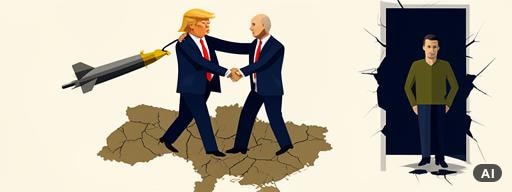
President Donald Trump said on 26 November that he calls Vladimir Putin a friend in order to secure a deal to end the war in Ukraine, arguing that open hostility towards the Russian leader would foreclose negotiations. Speaking to journalists at Mar-a-Lago on Thanksgiving Day, Mr Trump was asked how his warmth towards Mr Putin squared with a Truth Social post that morning on Russian military aggression in Europe. "Both statements can be true," he said. "We want to make a deal. We want to stop the Kremlin. I could say he is not my friend, or that I want to make a deal. I have to make a deal. They are losing 25,000 people a month." La Nouvelle Tribune noted that the figure is Mr Trump's own, with no breakdown between soldiers and civilians.
The US president located the main obstacle to a settlement in the personal antipathy between Mr Putin and Volodymyr Zelensky. "I could come in and say 'I don't like you', and then we would have the same problem as with Zelensky and Putin," he said. He added that he has known Mr Putin for a long time and that they had "a very good conversation", and said he believed the Russian leader wanted the war to end. Rejecting suggestions that his posture towards Moscow was soft, he cited thousands of Javelin anti-tank systems delivered to Ukraine early in the war and sanctions and high tariffs imposed on Russia. "I was very tough on Russia, but I want to make a deal if we can make one," he said.
Reaction from Kyiv was blunt. In an interview with the BBC, Mr Zelensky called the description "strange" and said Mr Putin "is an aggressor and a murderer" who cannot be a friend, comparing the usage to calling Hitler a good friend during the Second World War; he said such statements were painful for families who had lost children. Donald Tusk, Poland's prime minister, said Mr Putin would never be a friend of his country, while Radosław Sikorski, the foreign minister, criticised the remarks and Britain's Hamish Falconer called the Kremlin leader a butcher. From Moscow, Dmitry Peskov, the Kremlin spokesman, said on 26 November that friendly relations between the two presidents helped in discussing the most difficult problems. Jay Clayton, identified as US director of intelligence, said the compliments were appropriate but that Mr Putin was not a friend of America on Ukraine.
The exchange follows Mr Trump's greeting of Mr Putin at a bilateral meeting at the APEC summit in Shenzhen on 19 November, which Vedomosti reported lasted about 40 minutes and was followed by trilateral talks including Xi Jinping. At a White House press conference on 20 November, Mr Trump described "fantastic relations" with Mr Putin and "incredible energy" at the talks. He posted a photograph of the handshake captioned "My friend", dated 21 November by Tuoi Tre and 22 November by Vedomosti. Polsat News reported a second image juxtaposing Mr Putin with the Tehran conference photograph of Stalin, Roosevelt and Churchill, captioned "Great powers 1945, 2026".
Washington has sought an agreement between Moscow and Kyiv for months without result to date. Mr Trump said he believed both sides wanted the fighting to stop, adding that "it takes two to tango".
The Divergence across 6 points of view
- Critical: EUR, Other sources
- Neutral: AFR, ATL, SEA, RUS
- Favorable: no bloc
- Pale: the bloc has no reading of this story
Bloc by bloc, from the most critical to the most favourable
EUR Continental European pressCritical
Reading
Volodymyr Zelensky and allied governments in the east refuse the label: someone who invades and kills cannot be a friend, and American cordiality risks legitimising him.
Description
The explanation is reported in full — the deal, the hatred between the two leaders, the claim of past toughness through Javelins and sanctions — and is immediately answered by the Ukrainian president's comparison with calling Hitler a good friend. Kyiv-based coverage goes further, naming Putin a dictator and treating the friendship as an obstacle to containing the Kremlin, with Polish and British criticism attached.
Mechanismmoral hierarchy
The American negotiating rationale is set against a moral hierarchy of aggressor and victim, so that compromise itself looks like a concession on principle.
Other sourcesCritical
Reading
Volodymyr Zelensky rejects the friendship outright, and his words carry as much weight as the American justification: an aggressor and a killer cannot be a friend, and the families who lost their own are watching.
Description
The full explanation is laid out — the deal, the killing, the mutual hatred — and then met on equal footing by the Ukrainian president's refusal, which calls Putin an aggressor and a killer and likens the friendship to praising Hitler in the last century. European criticism and the American record on Javelins and sanctions are added, so the negotiation argument never closes the moral question.
Mechanismhistorical analogy
The justification is quoted at length and then answered with an analogy to the twentieth century, so the negotiating argument has to compete with a historical comparison.
AFR Sub-Saharan African pressNeutral
Reading
Donald Trump sells courtesy toward Vladimir Putin as negotiation, while the figures he cites are his own and say nothing about how many of the dead were civilians.
Description
The friendliness is presented as a negotiating tactic, but the toll of 25,000 people a month is flagged as the president's own figure, with no division between soldiers and civilians. The remark is placed inside a series of similar statements going back to September 2025, and months of American mediation are noted as so far fruitless.
Mechanismfact-checking the figure
The casualty figure is attributed to the speaker and its internal limits stated at once, while the statement is set inside a recurring series that makes it sound like a formula rather than a breakthrough.
ATL Atlantic / Anglosphere pressNeutral
Reading
The American president defends the friendship as leverage for a deal; Kyiv answers that the label is strange, and the point of principle is stated but not pressed.
Description
A brief bulletin records that the US president defends his friendship with Putin by invoking a deal and blames the two leaders' mutual hostility, while the Ukrainian president calls the label strange. The moral question is left hanging, compressed into the headline's contrast. Only a short snippet is available.
MechanismContrast compression
The two justifications are set side by side in a single sentence and left unresolved, so the contrast does the work instead of analysis.
SEA Southeast Asian pressNeutral
Reading
Donald Trump insists that without personal rapport nothing gets signed and that Moscow wants the war over; Kyiv's protest and Russian satisfaction are logged as details on the margin.
Description
The reasoning is laid out plainly: a deal matters more than a public display of hostility, the stalemate is blamed on the two leaders' mutual dislike, and the American president says he believes Putin wants the war to end. The Ukrainian reaction and a Russian envoy's approving repost appear as sidebars, without moral adjudication.
Mechanismjuxtaposition reporting
Positions are stacked one after another in reporting order, with no evaluation attached to any of them.
RUS Russian & CIS pressNeutral
Reading
Donald Trump claims that restraint toward Vladimir Putin is the price of a deal, and the Kremlin's spokesman backs him: personal rapport is what makes the hardest files discussable at all.
Description
Trump avoids any jab at Putin because a deal on Ukraine needs a working channel to him, and the real obstacle is the mutual hatred between the two presidents. The Shenzhen meeting and the friendly photo become the operative base of the negotiation, with the Kremlin's spokesman confirming that personal rapport helps on the hardest files. What is stored here are partial extracts.
MechanismDe-moralisation
The friendship is reframed as a technical instrument of negotiation, and the Russian side's comment is placed as closing confirmation of that reading.
This story appeared in
🇺🇦Ukraine3
🇧🇯Benin1
🇧🇾Belarus1
🇰🇬Kyrgyzstan1
🇵🇱Poland1
🇷🇴Romania1
🇺🇸United States1
🇻🇳Vietnam1
On the same topic
Broaden your view
Trump Says His Friendly Words on Putin Are Aimed at a Ukraine Deal
At Mar-a-Lago on Thanksgiving, the US president said hostility towards Vladimir Putin would block talks, drawing criticism from Kyiv and Warsaw while the Kremlin said warm ties help.
President Donald Trump said on 26 November that he calls Vladimir Putin a friend in order to secure a deal to end the war in Ukraine, arguing that open hostility towards the Russian leader would foreclose negotiations. Speaking to journalists at Mar-a-Lago on Thanksgiving Day, Mr Trump was asked how his warmth towards Mr Putin squared with a Truth Social post that morning on Russian military aggression in Europe. "Both statements can be true," he said. "We want to make a deal. We want to stop the Kremlin. I could say he is not my friend, or that I want to make a deal. I have to make a deal. They are losing 25,000 people a month." La Nouvelle Tribune noted that the figure is Mr Trump's own, with no breakdown between soldiers and civilians.
The US president located the main obstacle to a settlement in the personal antipathy between Mr Putin and Volodymyr Zelensky. "I could come in and say 'I don't like you', and then we would have the same problem as with Zelensky and Putin," he said. He added that he has known Mr Putin for a long time and that they had "a very good conversation", and said he believed the Russian leader wanted the war to end. Rejecting suggestions that his posture towards Moscow was soft, he cited thousands of Javelin anti-tank systems delivered to Ukraine early in the war and sanctions and high tariffs imposed on Russia. "I was very tough on Russia, but I want to make a deal if we can make one," he said.
Reaction from Kyiv was blunt. In an interview with the BBC, Mr Zelensky called the description "strange" and said Mr Putin "is an aggressor and a murderer" who cannot be a friend, comparing the usage to calling Hitler a good friend during the Second World War; he said such statements were painful for families who had lost children. Donald Tusk, Poland's prime minister, said Mr Putin would never be a friend of his country, while Radosław Sikorski, the foreign minister, criticised the remarks and Britain's Hamish Falconer called the Kremlin leader a butcher. From Moscow, Dmitry Peskov, the Kremlin spokesman, said on 26 November that friendly relations between the two presidents helped in discussing the most difficult problems. Jay Clayton, identified as US director of intelligence, said the compliments were appropriate but that Mr Putin was not a friend of America on Ukraine.
The exchange follows Mr Trump's greeting of Mr Putin at a bilateral meeting at the APEC summit in Shenzhen on 19 November, which Vedomosti reported lasted about 40 minutes and was followed by trilateral talks including Xi Jinping. At a White House press conference on 20 November, Mr Trump described "fantastic relations" with Mr Putin and "incredible energy" at the talks. He posted a photograph of the handshake captioned "My friend", dated 21 November by Tuoi Tre and 22 November by Vedomosti. Polsat News reported a second image juxtaposing Mr Putin with the Tehran conference photograph of Stalin, Roosevelt and Churchill, captioned "Great powers 1945, 2026".
Washington has sought an agreement between Moscow and Kyiv for months without result to date. Mr Trump said he believed both sides wanted the fighting to stop, adding that "it takes two to tango".
The Divergence across 6 points of view
- Critical: EUR, Other sources
- Neutral: AFR, ATL, SEA, RUS
- Favorable: no bloc
- Pale: the bloc has no reading of this story
EUR Continental European pressCritical
Reading
Volodymyr Zelensky and allied governments in the east refuse the label: someone who invades and kills cannot be a friend, and American cordiality risks legitimising him.
Description
The explanation is reported in full — the deal, the hatred between the two leaders, the claim of past toughness through Javelins and sanctions — and is immediately answered by the Ukrainian president's comparison with calling Hitler a good friend. Kyiv-based coverage goes further, naming Putin a dictator and treating the friendship as an obstacle to containing the Kremlin, with Polish and British criticism attached.
Mechanismmoral hierarchy
The American negotiating rationale is set against a moral hierarchy of aggressor and victim, so that compromise itself looks like a concession on principle.
Bloc by bloc, from the most critical to the most favourable
EUR Continental European pressCritical
Reading
Volodymyr Zelensky and allied governments in the east refuse the label: someone who invades and kills cannot be a friend, and American cordiality risks legitimising him.
Description
The explanation is reported in full — the deal, the hatred between the two leaders, the claim of past toughness through Javelins and sanctions — and is immediately answered by the Ukrainian president's comparison with calling Hitler a good friend. Kyiv-based coverage goes further, naming Putin a dictator and treating the friendship as an obstacle to containing the Kremlin, with Polish and British criticism attached.
Mechanismmoral hierarchy
The American negotiating rationale is set against a moral hierarchy of aggressor and victim, so that compromise itself looks like a concession on principle.
Other sourcesCritical
Reading
Volodymyr Zelensky rejects the friendship outright, and his words carry as much weight as the American justification: an aggressor and a killer cannot be a friend, and the families who lost their own are watching.
Description
The full explanation is laid out — the deal, the killing, the mutual hatred — and then met on equal footing by the Ukrainian president's refusal, which calls Putin an aggressor and a killer and likens the friendship to praising Hitler in the last century. European criticism and the American record on Javelins and sanctions are added, so the negotiation argument never closes the moral question.
Mechanismhistorical analogy
The justification is quoted at length and then answered with an analogy to the twentieth century, so the negotiating argument has to compete with a historical comparison.
AFR Sub-Saharan African pressNeutral
Reading
Donald Trump sells courtesy toward Vladimir Putin as negotiation, while the figures he cites are his own and say nothing about how many of the dead were civilians.
Description
The friendliness is presented as a negotiating tactic, but the toll of 25,000 people a month is flagged as the president's own figure, with no division between soldiers and civilians. The remark is placed inside a series of similar statements going back to September 2025, and months of American mediation are noted as so far fruitless.
Mechanismfact-checking the figure
The casualty figure is attributed to the speaker and its internal limits stated at once, while the statement is set inside a recurring series that makes it sound like a formula rather than a breakthrough.
ATL Atlantic / Anglosphere pressNeutral
Reading
The American president defends the friendship as leverage for a deal; Kyiv answers that the label is strange, and the point of principle is stated but not pressed.
Description
A brief bulletin records that the US president defends his friendship with Putin by invoking a deal and blames the two leaders' mutual hostility, while the Ukrainian president calls the label strange. The moral question is left hanging, compressed into the headline's contrast. Only a short snippet is available.
MechanismContrast compression
The two justifications are set side by side in a single sentence and left unresolved, so the contrast does the work instead of analysis.
SEA Southeast Asian pressNeutral
Reading
Donald Trump insists that without personal rapport nothing gets signed and that Moscow wants the war over; Kyiv's protest and Russian satisfaction are logged as details on the margin.
Description
The reasoning is laid out plainly: a deal matters more than a public display of hostility, the stalemate is blamed on the two leaders' mutual dislike, and the American president says he believes Putin wants the war to end. The Ukrainian reaction and a Russian envoy's approving repost appear as sidebars, without moral adjudication.
Mechanismjuxtaposition reporting
Positions are stacked one after another in reporting order, with no evaluation attached to any of them.
RUS Russian & CIS pressNeutral
Reading
Donald Trump claims that restraint toward Vladimir Putin is the price of a deal, and the Kremlin's spokesman backs him: personal rapport is what makes the hardest files discussable at all.
Description
Trump avoids any jab at Putin because a deal on Ukraine needs a working channel to him, and the real obstacle is the mutual hatred between the two presidents. The Shenzhen meeting and the friendly photo become the operative base of the negotiation, with the Kremlin's spokesman confirming that personal rapport helps on the hardest files. What is stored here are partial extracts.
MechanismDe-moralisation
The friendship is reframed as a technical instrument of negotiation, and the Russian side's comment is placed as closing confirmation of that reading.