Sign in
Edition of 10:00 CETSunday, August 2, 2026
320 outlets · 17 languages507 briefings today
Friday, May 15, 2026

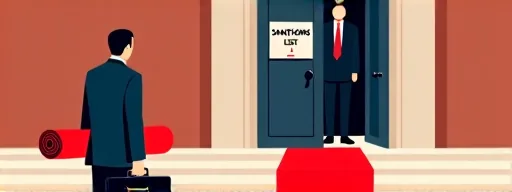
Beijing’s paper shuffle: Rubio slips through sanctions by a name change

China sidestepped its own sanctions by altering Marco Rubio’s name in official documents to permit his visit with Trump.

The most revealing moment of Marco Rubio’s visit to Beijing was not the viral footage of the US secretary of state gazing at an ornate ceiling, but the quiet diplomatic sleight of hand that allowed him to enter the country at all. Rubio, a longstanding critic of China’s human rights record, has been on Beijing’s blacklist since 2020, barred from entering the country. To avoid the humiliation of denying entry to the chief American diplomat during a presidential summit, Chinese authorities simply changed the transliteration of his surname in official documents and state media. Rubio became “Lubio” – a linguistic adjustment that preserved the formal ban while permitting his presence on the ground.

That bureaucratic fiction unfolded against a backdrop of studied hospitality inside the Great Hall of the People. Footage circulated rapidly online shows Rubio, seated during high-level talks, pointing upward and gesturing animatedly at the hall’s ceiling, a masterwork of traditional dou gong brackets and sunken panels. He appears to draw the attention of Defense Secretary Pete Hegseth to the ornate architecture. From Beijing, the moment was presented as a harmless instance of a guest admiring Chinese craftsmanship. From Washington, some read it as an awkward distraction from the summit’s weighty agenda. Italian and Israeli outlets, meanwhile, seized on the absurdity of a blacklisted official being charmed by a ceiling while his name was being re‑written in the press.

The name‑changing manoeuvre speaks to a deeper tension in the bilateral relationship. For Beijing, maintaining the sanctions on paper signals that it has not bent to American pressure, while granting a one‑time exemption allows the visit to proceed. For the Trump administration, the trip is a test of whether a more transactional approach can reset ties after years of confrontation over trade, technology, and human rights. Rubio’s past – he co‑sponsored legislation on Uyghur rights and called for sanctions on Chinese officials – made his inclusion in the delegation a symbolic gamble. The Chinese solution, viewed from Beijing, neatly avoided a diplomatic incident without conceding principle.

Looking ahead, this episode underscores how easily diplomatic norms can be bent when both sides wish to save face. The ceiling meme will fade, but the precedent of a government rewriting a foreign official’s name to circumvent its own laws may prove stickier. Analysts in London note that such improvisation works only for one‑off visits; should Rubio return, or should other blacklisted American officials seek entry, Beijing would have to choose between eroding its sanctions regime or blocking access again. For now, both capitals have what they need: Trump can claim a successful summit, Xi can point to a compliance gesture that never really happened, and Rubio can at least say he saw a very fine ceiling.

Divergence — who tells it how
39%Medium
3 blocs · positions from −0.50 to +0.40
CriticalFavorable
CINATLISR
Divergence between press blocs
Chinese press+0.40aligned
Atlantic / Anglosphere press−0.50critical
Israeli press−0.30critical
Chinese press+0.40

US Secretary of State Rubio was awestruck by the ornate ceiling of Beijing's Great Hall of the People, and the footage went viral. The candid moment diverted attention from diplomatic tensions, highlighting Chinese architectural splendor.

IronyPaternalism
Atlantic / Anglosphere press−0.50

Although Rubio is officially still banned from China, Beijing bypassed the sanctions by altering the transliteration of his name. The visit exposes the regime's bureaucratic sleight of hand.

SkepticismIrony
Israeli press−0.30

Rubio's bizarre behavior at the Beijing summit, pointing at the ceiling and fidgeting, sparked online mockery. China allowed his entry despite sanctions by tweaking the spelling of his name.

IronySchadenfreude
Breaking
Arsenal Open Pre-Season with 4-1 Win Over Girona as Arteta Vows Transfer Activity·Kumamoto Earthquake Death Toll Climbs to 38 as Evacuee Dies of Heatstroke in Car·PT formalises Lula’s re-election bid in São Paulo as sovereignty theme takes centre stage·Aesthetic medicine pivots to ‘ageing well’ as sleep and simple routines gain favour over anti-ageing products·South Korea records highest temperature in over a century at 42.5°C·Seven dead in head-on collision on Argentine provincial road·Iran’s dam reserves jump 37% as Lake Urmia hits 10-year high·US and Japan stage rare joint intervention to prop up yen after multi-decade lows·Arsenal Open Pre-Season with 4-1 Win Over Girona as Arteta Vows Transfer Activity·Kumamoto Earthquake Death Toll Climbs to 38 as Evacuee Dies of Heatstroke in Car·PT formalises Lula’s re-election bid in São Paulo as sovereignty theme takes centre stage·Aesthetic medicine pivots to ‘ageing well’ as sleep and simple routines gain favour over anti-ageing products·South Korea records highest temperature in over a century at 42.5°C·Seven dead in head-on collision on Argentine provincial road·Iran’s dam reserves jump 37% as Lake Urmia hits 10-year high·US and Japan stage rare joint intervention to prop up yen after multi-decade lows·
Upd. 11:23 AM4 languages · 6 outlets
6 outlets|4 languages|3 min read
Friday, May 15, 2026

Beijing’s paper shuffle: Rubio slips through sanctions by a name change

China sidestepped its own sanctions by altering Marco Rubio’s name in official documents to permit his visit with Trump.

The most revealing moment of Marco Rubio’s visit to Beijing was not the viral footage of the US secretary of state gazing at an ornate ceiling, but the quiet diplomatic sleight of hand that allowed him to enter the country at all. Rubio, a longstanding critic of China’s human rights record, has been on Beijing’s blacklist since 2020, barred from entering the country. To avoid the humiliation of denying entry to the chief American diplomat during a presidential summit, Chinese authorities simply changed the transliteration of his surname in official documents and state media. Rubio became “Lubio” – a linguistic adjustment that preserved the formal ban while permitting his presence on the ground.

That bureaucratic fiction unfolded against a backdrop of studied hospitality inside the Great Hall of the People. Footage circulated rapidly online shows Rubio, seated during high-level talks, pointing upward and gesturing animatedly at the hall’s ceiling, a masterwork of traditional dou gong brackets and sunken panels. He appears to draw the attention of Defense Secretary Pete Hegseth to the ornate architecture. From Beijing, the moment was presented as a harmless instance of a guest admiring Chinese craftsmanship. From Washington, some read it as an awkward distraction from the summit’s weighty agenda. Italian and Israeli outlets, meanwhile, seized on the absurdity of a blacklisted official being charmed by a ceiling while his name was being re‑written in the press.

The name‑changing manoeuvre speaks to a deeper tension in the bilateral relationship. For Beijing, maintaining the sanctions on paper signals that it has not bent to American pressure, while granting a one‑time exemption allows the visit to proceed. For the Trump administration, the trip is a test of whether a more transactional approach can reset ties after years of confrontation over trade, technology, and human rights. Rubio’s past – he co‑sponsored legislation on Uyghur rights and called for sanctions on Chinese officials – made his inclusion in the delegation a symbolic gamble. The Chinese solution, viewed from Beijing, neatly avoided a diplomatic incident without conceding principle.

Looking ahead, this episode underscores how easily diplomatic norms can be bent when both sides wish to save face. The ceiling meme will fade, but the precedent of a government rewriting a foreign official’s name to circumvent its own laws may prove stickier. Analysts in London note that such improvisation works only for one‑off visits; should Rubio return, or should other blacklisted American officials seek entry, Beijing would have to choose between eroding its sanctions regime or blocking access again. For now, both capitals have what they need: Trump can claim a successful summit, Xi can point to a compliance gesture that never really happened, and Rubio can at least say he saw a very fine ceiling.

Divergence — who tells it how
39%Medium
3 blocs · positions from −0.50 to +0.40
CriticalFavorable
CINATLISR
Divergence between press blocs
Chinese press+0.40aligned
Atlantic / Anglosphere press−0.50critical
Israeli press−0.30critical
Chinese press+0.40

US Secretary of State Rubio was awestruck by the ornate ceiling of Beijing's Great Hall of the People, and the footage went viral. The candid moment diverted attention from diplomatic tensions, highlighting Chinese architectural splendor.

IronyPaternalism
Atlantic / Anglosphere press−0.50

Although Rubio is officially still banned from China, Beijing bypassed the sanctions by altering the transliteration of his name. The visit exposes the regime's bureaucratic sleight of hand.

SkepticismIrony
Israeli press−0.30

Rubio's bizarre behavior at the Beijing summit, pointing at the ceiling and fidgeting, sparked online mockery. China allowed his entry despite sanctions by tweaking the spelling of his name.

IronySchadenfreude

This story appeared in

6 outlets · 4 languages

Broaden your view

From Geopolitics & Politics

Ceuta migrant surge leaves 57 dead, triggers Italy’s suspension of Schengen with Spain

2 languages · 112 outlets

From Economy & Markets

Mexico’s economy rebounds 1.5% in Q2, its fastest quarterly expansion in more than five years

1 language · 18 outlets

From Technology

Chery Q EV launch at Indonesia auto show draws 6,000 orders with online-only sales model

1 language · 15 outlets

Read more