Ukraine Confirms First Laser Intercept of a Russian Jet-Powered Drone, With Caveats
Brave1 says a Ukrainian laser brought down a jet-powered Geran drone in combat; adviser Serhii Beskrestnov says the Blysk system was shielding critical infrastructure at the time.
How they tell it
7%7 outlets · 5 languages
none critical, 3 neutral, none favorable
Read the divergences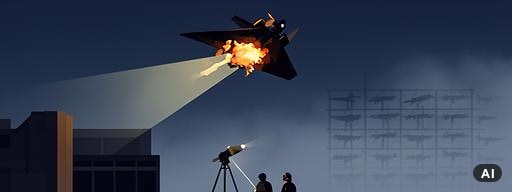
Ukraine's government-run defence platform Brave1 said on Friday that a Ukrainian laser system had intercepted a Russian jet-powered drone in combat, describing the engagement as a first. The weapon was developed by a recipient of a Brave1 grant and was operated by a private air-defence team, the platform said. Earlier in the week, President Volodymyr Zelensky's adviser Serhii Beskrestnov published footage of a target falling in a fireball and said a Russian Geran drone with jet propulsion had been shot down by a laser "for the first time"; he named the system as Blysk, built by the company Carmine Sky, and said it had been protecting critical infrastructure during the engagement. According to Der Standard, Beskrestnov announced the incident on 25 November and did not say where or when it took place; the published footage suggests the target was a Geran-4, a jet-powered Russian derivative of the Iranian Shahed.
Der Standard reports that Blysk delivers four kilowatts and has a stated range of up to one kilometre against air targets, and that, according to media reports, it entered combat service in Kyiv in early November. Holding the beam on a Shahed- or Geran-type drone takes several seconds because of the vehicle's multi-layer fuselage, the paper adds. Carmine Sky argues that laser systems work more cheaply than conventional anti-aircraft gun turrets and carry fewer risks for people nearby because no projectiles fall to the ground; 20 Minutes, citing Brave1, reports that a laser shot costs less than a burst of machine-gun fire.
Brave1 cautioned that a first successful interception does not mean the technology is ready for mass deployment, and that laser air defence remains experimental. At least seven teams in Ukraine are working on laser weapons, the platform said, and it asked Ukrainian actors in the sector to refrain from disclosing sensitive information. Laser weapons have been under development since the 1970s but are operational in only a handful of countries, and successful combat interceptions remain rare, according to Brave1. Der Standard notes that the "world first" claim applies only to this target type: the Ukrainian armed forces announced their own Tryzub system in December 2024, and Israel fields the Iron Beam laser from Rafael. Physical constraints include cooling between engagements, a stable power supply and weather, while possible Russian countermeasures such as heat-shielding coatings or reflective surfaces would reduce effectiveness.
Brave1's confirmation follows months in which, according to the platform, Moscow has made growing use of jet-powered drones that fly faster and are harder to bring down than earlier models. Ukraine has faced almost daily Russian drone and missile attacks since the invasion of February 2022, Berlingske notes; energy and industrial infrastructure is regularly targeted, according to 20 Minutes. Der Standard reports that Ukrainian forces recently achieved interception rates of 80 to 93 per cent against slower drone models, a result it links to Russia's shift towards jet propulsion. Blysk is one component of a wider mix that includes mobile fire groups and automatic gun turrets using AI-supported image recognition. Beskrestnov has himself dampened expectations, saying the technology is complex and costly and that it is too early for serial production; Brave1 likewise describes laser air defence as experimental.
The Divergence across 3 points of view
- Critical: no bloc
- Neutral: CIN, GIAPPONE_COREA_TAIWAN, EUR
- Favorable: no bloc
- Pale: the bloc has no reading of this story
Bloc by bloc, from the most critical to the most favourable
CIN Chinese pressNeutral
Reading
Ukraine’s state-backed defence platform announces a first laser intercept and attributes the claim to Ukrainian officials and footage.
Description
Ukraine’s state-backed defence platform says a laser system has downed a Russian jet-powered drone for the first time. The account is brief and attributes the claim to Ukrainian officials and footage, without assessing whether the capability changes air defence. The available snippet leaves the system’s performance and limits largely unexamined.
MechanismAttributed claim
The available account stays close to the official announcement and does not assess the claim more broadly, so it appears as a reported first rather than a verified capability.
GIAPPONE_COREA_TAIWANNeutral
Reading
A Ukrainian defence group presents a first laser downing, relayed with the qualification that the technology remains experimental and rare.
Description
A Ukrainian defence group reports the first laser downing of a Russian jet-powered drone, relayed through an international news agency. The account repeats the official claim while stressing that the technology is experimental, rare and not ready for mass use. It sets the event against Russia’s frequent drone and missile attacks and the harder problem of faster jet drones.
MechanismCautious relay
The account repeats the official claim and immediately adds caveats from the same source, keeping the event inside a cautious, attribution-led register.
EUR Continental European pressNeutral
Reading
Ukrainian authorities and a defence platform claim a first laser downing, while the account presents the system as promising but experimental.
Description
Ukrainian authorities and a defence platform report the first laser downing of a Russian jet-powered drone, naming the Blysk system and the company behind it. The coverage adds technical parameters, cost arguments and caveats that laser air defence remains experimental and limited by range, weather and power supply. The advance is treated as notable but not as a battlefield turning point.
MechanismTechnical calibration
The narrative balances the reported success with technical parameters, cost arguments and limits such as range, weather and power supply, making the advance plausible without inflating it.
This story appeared in
🇦🇹Austria2
🇩🇪Germany1
🇩🇰Denmark1
🇫🇷France1
🇭🇰Hong Kong SAR China1
🇲🇳Mongolia1
On the same topic
Broaden your view
Ukraine Confirms First Laser Intercept of a Russian Jet-Powered Drone, With Caveats
Brave1 says a Ukrainian laser brought down a jet-powered Geran drone in combat; adviser Serhii Beskrestnov says the Blysk system was shielding critical infrastructure at the time.
Ukraine's government-run defence platform Brave1 said on Friday that a Ukrainian laser system had intercepted a Russian jet-powered drone in combat, describing the engagement as a first. The weapon was developed by a recipient of a Brave1 grant and was operated by a private air-defence team, the platform said. Earlier in the week, President Volodymyr Zelensky's adviser Serhii Beskrestnov published footage of a target falling in a fireball and said a Russian Geran drone with jet propulsion had been shot down by a laser "for the first time"; he named the system as Blysk, built by the company Carmine Sky, and said it had been protecting critical infrastructure during the engagement. According to Der Standard, Beskrestnov announced the incident on 25 November and did not say where or when it took place; the published footage suggests the target was a Geran-4, a jet-powered Russian derivative of the Iranian Shahed.
Der Standard reports that Blysk delivers four kilowatts and has a stated range of up to one kilometre against air targets, and that, according to media reports, it entered combat service in Kyiv in early November. Holding the beam on a Shahed- or Geran-type drone takes several seconds because of the vehicle's multi-layer fuselage, the paper adds. Carmine Sky argues that laser systems work more cheaply than conventional anti-aircraft gun turrets and carry fewer risks for people nearby because no projectiles fall to the ground; 20 Minutes, citing Brave1, reports that a laser shot costs less than a burst of machine-gun fire.
Brave1 cautioned that a first successful interception does not mean the technology is ready for mass deployment, and that laser air defence remains experimental. At least seven teams in Ukraine are working on laser weapons, the platform said, and it asked Ukrainian actors in the sector to refrain from disclosing sensitive information. Laser weapons have been under development since the 1970s but are operational in only a handful of countries, and successful combat interceptions remain rare, according to Brave1. Der Standard notes that the "world first" claim applies only to this target type: the Ukrainian armed forces announced their own Tryzub system in December 2024, and Israel fields the Iron Beam laser from Rafael. Physical constraints include cooling between engagements, a stable power supply and weather, while possible Russian countermeasures such as heat-shielding coatings or reflective surfaces would reduce effectiveness.
Brave1's confirmation follows months in which, according to the platform, Moscow has made growing use of jet-powered drones that fly faster and are harder to bring down than earlier models. Ukraine has faced almost daily Russian drone and missile attacks since the invasion of February 2022, Berlingske notes; energy and industrial infrastructure is regularly targeted, according to 20 Minutes. Der Standard reports that Ukrainian forces recently achieved interception rates of 80 to 93 per cent against slower drone models, a result it links to Russia's shift towards jet propulsion. Blysk is one component of a wider mix that includes mobile fire groups and automatic gun turrets using AI-supported image recognition. Beskrestnov has himself dampened expectations, saying the technology is complex and costly and that it is too early for serial production; Brave1 likewise describes laser air defence as experimental.
The Divergence across 3 points of view
- Critical: no bloc
- Neutral: CIN, GIAPPONE_COREA_TAIWAN, EUR
- Favorable: no bloc
- Pale: the bloc has no reading of this story
CIN Chinese pressNeutral
Reading
Ukraine’s state-backed defence platform announces a first laser intercept and attributes the claim to Ukrainian officials and footage.
Description
Ukraine’s state-backed defence platform says a laser system has downed a Russian jet-powered drone for the first time. The account is brief and attributes the claim to Ukrainian officials and footage, without assessing whether the capability changes air defence. The available snippet leaves the system’s performance and limits largely unexamined.
MechanismAttributed claim
The available account stays close to the official announcement and does not assess the claim more broadly, so it appears as a reported first rather than a verified capability.
Bloc by bloc, from the most critical to the most favourable
CIN Chinese pressNeutral
Reading
Ukraine’s state-backed defence platform announces a first laser intercept and attributes the claim to Ukrainian officials and footage.
Description
Ukraine’s state-backed defence platform says a laser system has downed a Russian jet-powered drone for the first time. The account is brief and attributes the claim to Ukrainian officials and footage, without assessing whether the capability changes air defence. The available snippet leaves the system’s performance and limits largely unexamined.
MechanismAttributed claim
The available account stays close to the official announcement and does not assess the claim more broadly, so it appears as a reported first rather than a verified capability.
GIAPPONE_COREA_TAIWANNeutral
Reading
A Ukrainian defence group presents a first laser downing, relayed with the qualification that the technology remains experimental and rare.
Description
A Ukrainian defence group reports the first laser downing of a Russian jet-powered drone, relayed through an international news agency. The account repeats the official claim while stressing that the technology is experimental, rare and not ready for mass use. It sets the event against Russia’s frequent drone and missile attacks and the harder problem of faster jet drones.
MechanismCautious relay
The account repeats the official claim and immediately adds caveats from the same source, keeping the event inside a cautious, attribution-led register.
EUR Continental European pressNeutral
Reading
Ukrainian authorities and a defence platform claim a first laser downing, while the account presents the system as promising but experimental.
Description
Ukrainian authorities and a defence platform report the first laser downing of a Russian jet-powered drone, naming the Blysk system and the company behind it. The coverage adds technical parameters, cost arguments and caveats that laser air defence remains experimental and limited by range, weather and power supply. The advance is treated as notable but not as a battlefield turning point.
MechanismTechnical calibration
The narrative balances the reported success with technical parameters, cost arguments and limits such as range, weather and power supply, making the advance plausible without inflating it.