Lukashenko Challenges Putin's Historical Case for Ukrainian Territory in Le Point Interview
Belarus's president said medieval history cannot justify territorial claims, arguing that by the same logic Russia would belong to Mongolia, then softened his remarks about Moscow's case.
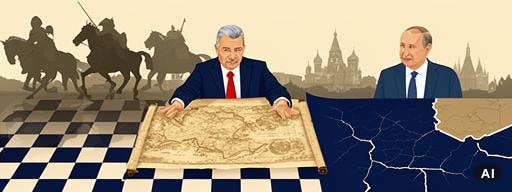
Alexander Lukashenko has publicly questioned the historical reasoning behind Russia's territorial claims on Ukraine, telling the French weekly Le Point that the same argument would require Russia to be handed over to Mongolia. In the interview, published on Wednesday, the Belarusian president cited the Mongol-Tatar domination of the Russian principalities between the 13th and the end of the 15th century and asked to whom the whole of Russia should then be given. He located the origins of East Slavic statehood in Kyivan Rus in the 11th and 12th centuries, centred on the territory of present-day Ukraine, and said later historical periods cannot serve as the basis for claims on states that are independent today.
Having made the argument, Mr Lukashenko moved to limit its reach. According to the published account, he said Vladimir Putin "understands this perfectly", that the Russian president does not dispute the existence of the Ukrainian people or of Ukrainian statehood, and that his words are simply "misinterpreted". He said he shared Moscow's position on the "need for a common future for the peoples of the region", and he restated the Kremlin claim that Ukraine started the war by "killing and burning" Russians. At the same time he treated Mr Putin's demand for the return of NATO's borders to where they stood in 1997 as an opening position rather than a settlement, saying that negotiations begin with maximum demands and that the sides must then sit down and talk; he added that he was convinced Russia would take the whole of the Donbas region.
Mr Lukashenko also offered to accompany the Ukrainian president, Volodymyr Zelensky, on a flight to Moscow to meet Mr Putin, saying he would act as guarantor of his safety. Mr Zelensky rejected the proposal as "not serious", saying that with the two countries at war a meeting could take place neither in Moscow nor in Kyiv.
The argument Mr Lukashenko was addressing has been central to Kremlin rhetoric since Mr Putin's 2021 article on the historical unity of Russians and Ukrainians. On the eve of the full-scale invasion of 24 February 2022, Mr Putin invoked those claims to deny the legitimacy of Ukraine as an independent state and presented the invasion as the correction of a historical injustice; historians and international observers have described the Kremlin's use of that precedent as selective and historically unfounded. The Mongolian counter-precedent has been invoked before: in 2024 the former Mongolian president, Tsakhiagiin Elbegdorj, posted a 1471 map showing Russia as a small territory within a vast Mongolian empire, with the comment: "Don't worry. We are a peaceful and free nation."
The intervention is notable for who made it. Mr Lukashenko has ruled Belarus since 1994, making him Europe's longest-serving leader, and he has relied on Kremlin support to stay in power since the contested 2020 presidential election, which the EU and Western governments did not recognise. Belarus allowed Russia to use its territory to launch stages of the invasion, with Russian forces advancing on Kyiv from the north before being pushed back, and Minsk has remained a close military and political ally of Moscow without committing its own troops. Belarus has faced successive rounds of Western sanctions over the repression of dissent and its role in the war. Mr Lukashenko has diverged from Russian positions before: in June 2026 he publicly doubted Russia's capacity for a military victory. Beyond the publication of the interview and Kyiv's dismissal of the Moscow trip, no next step has been announced.
This story appeared in
🇬🇷Greece2
🇩🇪Germany1
🇮🇹Italy1
🇱🇻Latvia1
🇷🇴Romania1
🇸🇮Slovenia1
On the same topic
Broaden your view
Lukashenko Challenges Putin's Historical Case for Ukrainian Territory in Le Point Interview
Belarus's president said medieval history cannot justify territorial claims, arguing that by the same logic Russia would belong to Mongolia, then softened his remarks about Moscow's case.
Alexander Lukashenko has publicly questioned the historical reasoning behind Russia's territorial claims on Ukraine, telling the French weekly Le Point that the same argument would require Russia to be handed over to Mongolia. In the interview, published on Wednesday, the Belarusian president cited the Mongol-Tatar domination of the Russian principalities between the 13th and the end of the 15th century and asked to whom the whole of Russia should then be given. He located the origins of East Slavic statehood in Kyivan Rus in the 11th and 12th centuries, centred on the territory of present-day Ukraine, and said later historical periods cannot serve as the basis for claims on states that are independent today.
Having made the argument, Mr Lukashenko moved to limit its reach. According to the published account, he said Vladimir Putin "understands this perfectly", that the Russian president does not dispute the existence of the Ukrainian people or of Ukrainian statehood, and that his words are simply "misinterpreted". He said he shared Moscow's position on the "need for a common future for the peoples of the region", and he restated the Kremlin claim that Ukraine started the war by "killing and burning" Russians. At the same time he treated Mr Putin's demand for the return of NATO's borders to where they stood in 1997 as an opening position rather than a settlement, saying that negotiations begin with maximum demands and that the sides must then sit down and talk; he added that he was convinced Russia would take the whole of the Donbas region.
Mr Lukashenko also offered to accompany the Ukrainian president, Volodymyr Zelensky, on a flight to Moscow to meet Mr Putin, saying he would act as guarantor of his safety. Mr Zelensky rejected the proposal as "not serious", saying that with the two countries at war a meeting could take place neither in Moscow nor in Kyiv.
The argument Mr Lukashenko was addressing has been central to Kremlin rhetoric since Mr Putin's 2021 article on the historical unity of Russians and Ukrainians. On the eve of the full-scale invasion of 24 February 2022, Mr Putin invoked those claims to deny the legitimacy of Ukraine as an independent state and presented the invasion as the correction of a historical injustice; historians and international observers have described the Kremlin's use of that precedent as selective and historically unfounded. The Mongolian counter-precedent has been invoked before: in 2024 the former Mongolian president, Tsakhiagiin Elbegdorj, posted a 1471 map showing Russia as a small territory within a vast Mongolian empire, with the comment: "Don't worry. We are a peaceful and free nation."
The intervention is notable for who made it. Mr Lukashenko has ruled Belarus since 1994, making him Europe's longest-serving leader, and he has relied on Kremlin support to stay in power since the contested 2020 presidential election, which the EU and Western governments did not recognise. Belarus allowed Russia to use its territory to launch stages of the invasion, with Russian forces advancing on Kyiv from the north before being pushed back, and Minsk has remained a close military and political ally of Moscow without committing its own troops. Belarus has faced successive rounds of Western sanctions over the repression of dissent and its role in the war. Mr Lukashenko has diverged from Russian positions before: in June 2026 he publicly doubted Russia's capacity for a military victory. Beyond the publication of the interview and Kyiv's dismissal of the Moscow trip, no next step has been announced.