España: 14 muertos en una embarcación con un centenar de migrantes cerca de El Hierro
El balance provisional, confirmado por el ministro Ángel Víctor Torres, se elevó a 14 fallecidos tras hallarse inicialmente entre ocho y diez cuerpos; las agencias discrepan sobre el puerto de remolque de la nave.
Cómo la cuentan
10%47 medios · 17 idiomas
7 críticas, 6 neutrales, ninguna favorable
Leer las divergencias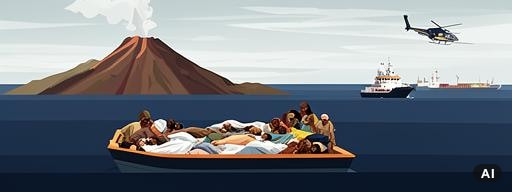
Catorce personas fueron halladas sin vida a bordo de una embarcación que llevaba a alrededor de un centenar de migrantes y que fue localizada a la deriva el viernes frente a la isla española de El Hierro, en el archipiélago de Canarias, según la agencia EFE. El servicio de salvamento marítimo había informado primero del hallazgo de entre ocho y diez cuerpos; el balance se elevó luego a 14, cifra confirmada el sábado por el ministro de Política Territorial, Ángel Víctor Torres, a través de la plataforma X.
Seis personas fueron trasladadas en helicóptero a un hospital de la isla en estado grave, entre ellas cinco hombres y una mujer, de acuerdo con Pajhwok, que recoge relatos de deshidratación e hipotermia entre los rescatados, algunos de los cuales no podían mantenerse en pie. Otras versiones, difundidas por agencias árabes, sitúan en 84 los supervivientes desembarcados, entre ellos tres mujeres y tres niños, ocho de ellos con necesidad de atención médica inmediata.
El origen de esos 84 supervivientes es uno de los puntos que las versiones no resuelven. Despachos que citan a EFE, entre ellos los de DW y Deccan Herald, sostienen que esas personas desembarcaron en el puerto de La Restinga desde otra embarcación, mientras otras agencias las presentan como ocupantes del mismo barco siniestrado. También diverge el puerto al que fue remolcada la nave con los cuerpos: EFE y los medios que la citan señalan La Estaca, en tanto Sky News Arabia, Al-Quds, WAFA y Shehab mencionan La Restinga. DW consignó además que el diario El País informó de 15 fallecidos y que no se busca a ningún desaparecido; un despacho de Sky News Arabia, que cita a AFP, refirió que un migrante optó por permanecer a bordo, lo que apuntaría a más de cien personas embarcadas.
Según los testimonios de los propios rescatados recogidos por Pajhwok, la embarcación había zarpado de Banjul, capital de Gambia, diez días antes. Investigaciones preliminares citadas por Al Ittihad indican que el motor se averió tres días antes del hallazgo, lo que la dejó a la deriva.
El suceso ocurrió la víspera de las elecciones generales españolas del domingo, comicios en los que la inmigración se ha convertido en asunto central de la campaña. El jefe del Gobierno regional canario, Fernando Clavijo, escribió en X que siente «mucho dolor y una sensación de impotencia ante esta nueva tragedia» y reclamó actuación al Ejecutivo español y a la Comisión Europea: «La emergencia humanitaria no empieza en El Hierro, sino en las costas de Senegal y Gambia, donde tenemos que actuar». Las llegadas al archipiélago se aceleraron desde octubre y el 25 de noviembre se alcanzó un récord de 2.100 personas en un solo día, la mayoría a El Hierro, de unos 11.400 habitantes; las autoridades habían declarado el estado de emergencia a comienzos de noviembre.
La Divergencia de los 13 puntos de vista
- Crítica: AFR, ALM, LAT, GLF, RUS, TUR, PALESTINESE
- Neutral: ATL, GIAPPONE_COREA_TAIWAN, EUR, SEA, IND, CIN
- Favorable: ningún bloque
- Claro: el bloque no tiene una lectura de esta historia
Bloque por bloque, del más crítico al más favorable
AFR Prensa africana subsaharianaCrítica
Lectura
The account follows the route from the departure shore: Gambia, Senegal, the October departures, and tells the shipwreck as the last link in a chain that begins well before El Hierro.
Descripción
The account starts from the point of departure: a pirogue that left Gambia ten days earlier with about a hundred people on board, intercepted 72 km from El Hierro. The provisional toll moves between eight and ten bodies, then rises, and survivors are described disembarking at La Restinga on stretchers or wrapped in thermal blankets. The tragedy is placed within an acceleration of departures towards the Canaries since late October, with the Spanish rescue service as the main source.
Mecanismorescue-source anchoring
The Spanish rescue service and a migration-specialist outlet are used as the primary source, while the toll is presented as still provisional and evolving.
ALM Prensa árabe Levante-MagrebCrítica
Lectura
The account holds together the rising death toll and the Spanish electoral calendar, and relays the call to act on the countries of departure.
Descripción
The toll is updated to fourteen dead after more bodies are found, while survivors are disembarked at La Restinga. The case is placed days before Spain's general election, with immigration as a central campaign issue. The Canary Islands regional president's call to act at the source, on the coasts of Senegal and Gambia, is carried.
Mecanismoelectoral hook
The progressive updating of the toll and the hook to the election campaign build a sense of political urgency.
LAT Prensa latinoamericanaCrítica
Lectura
The account entrusts the Spanish minister with confirming the toll and the line about migrants' desperation, and closes on the Spanish electoral picture.
Descripción
The toll rises to fourteen dead and the Spanish minister for territorial policy confirms the figure, expressing condolences. The line about migrants not boarding a cayuco for fun but out of desperation is carried. The case is placed on the eve of Spain's general election, with polls favouring the right and possible deals with the far right.
Mecanismomoral quotation
The institutional quotation and the appeal to desperation as motive shift the account onto a moral plane, without direct commentary from the outlet.
GLF Prensa del Golfo árabeCrítica
Lectura
The account reconstructs the crossing as a technical sequence of breakdown, drifting and rescue, and places the case within the Spanish political debate without taking sides.
Descripción
The shipwreck is reconstructed from the route: departure from Banjul ten days earlier, engine failure three days before the sighting, rescue with vessels and a helicopter. The toll is fourteen dead and eighty-four survivors taken to La Restinga. In the background, the Spanish political clash over immigration close to the vote and the contrast between openness and tighter controls.
Mecanismosequential reconstruction
The step-by-step reconstruction of the voyage and the use of Spanish agencies as sources keep the account on the plane of verifiable facts.
RUS Prensa rusa y CEICrítica
Lectura
The account foregrounds the irregular-entry figures and the Spanish prime minister's reading of flows as a threat to territorial integrity, alongside the account of the shipwreck.
Descripción
The toll rises to fourteen dead and the vessel is taken to La Restinga; six people in serious condition are airlifted out. The piece cites the Canary Islands regional president's call to act on the coasts of Senegal and Gambia, and recalls the Spanish prime minister's position on illegal flows as a threat to territorial integrity. Spanish interior ministry data on irregular entries complete the picture.
Mecanismoshift to the flow picture
Pairing the human toll with statistical data on entries shifts the centre of gravity from the single tragedy to the overall picture of flows.
TUR Prensa turcaCrítica
Lectura
The account reconstructs the crossing and the rescue and supports the story with official Spanish data on sea arrivals.
Descripción
The shipwreck is reconstructed with the route from Banjul, the engine failure and the rescue with vessels and a helicopter. The toll is fourteen dead and ninety saved, with six seriously injured taken to hospital. Spanish interior ministry data on irregular sea arrivals and the share reaching the Canaries are carried.
Mecanismotechnical sequence
The technical sequence of events and the use of ministry data keep the piece on an informational register.
PALESTINESECrítica
Lectura
The account reports the toll and the survivors' condition, and frames the Atlantic route as one of the world's most dangerous.
Descripción
The shipwreck is reported with a toll of fourteen dead and ninety saved, after ten days of navigation from Gambia. Details on the seriously injured airlifted to hospital and on survivors with dehydration and hypothermia are carried. The Atlantic route to the Canaries is described as one of the most dangerous because of the length of crossings and sea conditions.
Mecanismoclinical description
The description of survivors' medical condition and the qualification of the route build the picture without direct commentary.
ATL Prensa atlántica / anglosferaNeutral
Lectura
The account places the shipwreck within the Spanish electoral frame and lets the regional president and the clash between the prime minister and the right set the political tone.
Descripción
The toll of fourteen dead is reported as the boat is towed to La Estaca and survivors disembark at La Restinga. The case is placed days before Spain's general election, with immigration as a defining campaign issue. The Canary Islands regional president's call to act on the coasts of Senegal and Gambia is carried, along with the contrast between the Spanish prime minister and the right over controls.
Mecanismoelectoral framing
The hook to Sunday's vote and the quotation of opposing positions turn the event into a political case without taking a side.
GIAPPONE_COREA_TAIWANNeutral
Lectura
The account places the shipwreck within the Spanish electoral frame and describes the emergency on the island with arrival figures and deployed resources.
Descripción
The shipwreck is placed on the eve of Spain's general election, with immigration as a central campaign issue. The record arrival figures and the emergency declared on the island are carried, along with military deployment and temporary medical posts. The Spanish political contrast between the prime minister and the right over controls completes the picture.
Mecanismoelectoral framing
The hook to the vote and the description of emergency measures build a sense of urgency without taking sides.
EUR Prensa europea continentalNeutral
Lectura
The account lines up the arrival figures and the preceding weeks, and lets the regional president be the one to demand action from Madrid and Brussels.
Descripción
The toll rises to fourteen dead as the boat is towed to La Estaca and survivors disembark at La Restinga. The frame widens immediately to the preceding weeks: record arrivals, a state of emergency declared in early November, island facilities under pressure. The voice of the Canary Islands regional president calls for action from Madrid and the European Commission, with the Spanish election campaign in the background.
Mecanismochronological accumulation
The chronological sequence of arrivals and the quoted institutional request build urgency without taking a partisan stance.
SEA Prensa del Sudeste AsiáticoNeutral
Lectura
The account reports the numbers and the rescue operations in wire-service tone, without adding a political reading of its own.
Descripción
The event is reported with the essential numbers: fourteen dead, about a hundred people on board, eighty-four survivors, six seriously injured airlifted to hospital. The boat, found 72 km south of El Hierro, is towed to La Estaca. The context is the rise in arrivals and the emergency declared on the island, with the Spanish vote in the background.
Mecanismonumeric dispatch
Reliance on compact figures and agency sources keeps the piece on a descriptive, verifiable register.
IND Prensa india y del sur de AsiaNeutral
Lectura
The account reports the event with the numbers and the route, and leans on agencies for the context of record arrivals.
Descripción
The discovery of the bodies and the rescue of about ninety people are reported with the essential numbers and the departure route from Banjul. The record arrivals figure of 25 November and the classification of the Atlantic route as one of the world's most dangerous are carried. The piece stays on the plane of reporting, with Spanish agencies and Reuters as sources.
Mecanismoagency synthesis
The synthesis of essential data and the reference to agency sources keep the piece on an informational register.
CIN Prensa chinaNeutral
Lectura
The account reports the numbers and the Canary Islands authorities' request to Madrid and Brussels, without adding a political reading of its own.
Descripción
The event is reported with the essential numbers: fourteen dead, eighty-four survivors, six seriously injured airlifted to hospital. The boat had left Gambia and spent about ten days at sea. Pressure on the island's reception facilities and the Canary Islands government's call to Madrid and the European Union are carried.
Mecanismoinstitutional synthesis
The synthesis of essential data and the reference to the institutional request keep the piece on a descriptive register.
Esta noticia apareció en
🇵🇸Territorios Palestinos3
🇦🇪Emiratos Árabes Unidos2
🇧🇩Bangladés2
🇮🇳India2
🇲🇾Malasia2
🇷🇺Rusia2
🇦🇫Afganistán1
Mostrar los 47 medios
🇦🇹Austria1
🇧🇪Bélgica1
🇧🇷Brasil1
🇨🇭Suiza1
🇨🇳China1
🇨🇾Chipre1
🇩🇪Alemania1
🇪🇸España1
🇫🇷Francia1
🇬🇷Grecia1
🇭🇰RAE de Hong Kong (China)1
🇭🇷Croacia1
🇮🇩Indonesia1
🇮🇪Irlanda1
🇮🇹Italia1
🇱🇹Lituania1
🇱🇺Luxemburgo1
🇲🇽México1
🇳🇵Nepal1
🇵🇭Filipinas1
🇵🇾Paraguay1
🇸🇦Arabia Saudí1
🇸🇳Senegal1
🇸🇾Siria1
🇹🇼Taiwán1
🇻🇪Venezuela1
Sobre el mismo tema
Amplía tu mirada
España: 14 muertos en una embarcación con un centenar de migrantes cerca de El Hierro
El balance provisional, confirmado por el ministro Ángel Víctor Torres, se elevó a 14 fallecidos tras hallarse inicialmente entre ocho y diez cuerpos; las agencias discrepan sobre el puerto de remolque de la nave.
Catorce personas fueron halladas sin vida a bordo de una embarcación que llevaba a alrededor de un centenar de migrantes y que fue localizada a la deriva el viernes frente a la isla española de El Hierro, en el archipiélago de Canarias, según la agencia EFE. El servicio de salvamento marítimo había informado primero del hallazgo de entre ocho y diez cuerpos; el balance se elevó luego a 14, cifra confirmada el sábado por el ministro de Política Territorial, Ángel Víctor Torres, a través de la plataforma X.
Seis personas fueron trasladadas en helicóptero a un hospital de la isla en estado grave, entre ellas cinco hombres y una mujer, de acuerdo con Pajhwok, que recoge relatos de deshidratación e hipotermia entre los rescatados, algunos de los cuales no podían mantenerse en pie. Otras versiones, difundidas por agencias árabes, sitúan en 84 los supervivientes desembarcados, entre ellos tres mujeres y tres niños, ocho de ellos con necesidad de atención médica inmediata.
El origen de esos 84 supervivientes es uno de los puntos que las versiones no resuelven. Despachos que citan a EFE, entre ellos los de DW y Deccan Herald, sostienen que esas personas desembarcaron en el puerto de La Restinga desde otra embarcación, mientras otras agencias las presentan como ocupantes del mismo barco siniestrado. También diverge el puerto al que fue remolcada la nave con los cuerpos: EFE y los medios que la citan señalan La Estaca, en tanto Sky News Arabia, Al-Quds, WAFA y Shehab mencionan La Restinga. DW consignó además que el diario El País informó de 15 fallecidos y que no se busca a ningún desaparecido; un despacho de Sky News Arabia, que cita a AFP, refirió que un migrante optó por permanecer a bordo, lo que apuntaría a más de cien personas embarcadas.
Según los testimonios de los propios rescatados recogidos por Pajhwok, la embarcación había zarpado de Banjul, capital de Gambia, diez días antes. Investigaciones preliminares citadas por Al Ittihad indican que el motor se averió tres días antes del hallazgo, lo que la dejó a la deriva.
El suceso ocurrió la víspera de las elecciones generales españolas del domingo, comicios en los que la inmigración se ha convertido en asunto central de la campaña. El jefe del Gobierno regional canario, Fernando Clavijo, escribió en X que siente «mucho dolor y una sensación de impotencia ante esta nueva tragedia» y reclamó actuación al Ejecutivo español y a la Comisión Europea: «La emergencia humanitaria no empieza en El Hierro, sino en las costas de Senegal y Gambia, donde tenemos que actuar». Las llegadas al archipiélago se aceleraron desde octubre y el 25 de noviembre se alcanzó un récord de 2.100 personas en un solo día, la mayoría a El Hierro, de unos 11.400 habitantes; las autoridades habían declarado el estado de emergencia a comienzos de noviembre.
La Divergencia de los 13 puntos de vista
- Crítica: AFR, ALM, LAT, GLF, RUS, TUR, PALESTINESE
- Neutral: ATL, GIAPPONE_COREA_TAIWAN, EUR, SEA, IND, CIN
- Favorable: ningún bloque
- Claro: el bloque no tiene una lectura de esta historia
AFR Prensa africana subsaharianaCrítica
Lectura
The account follows the route from the departure shore: Gambia, Senegal, the October departures, and tells the shipwreck as the last link in a chain that begins well before El Hierro.
Descripción
The account starts from the point of departure: a pirogue that left Gambia ten days earlier with about a hundred people on board, intercepted 72 km from El Hierro. The provisional toll moves between eight and ten bodies, then rises, and survivors are described disembarking at La Restinga on stretchers or wrapped in thermal blankets. The tragedy is placed within an acceleration of departures towards the Canaries since late October, with the Spanish rescue service as the main source.
Mecanismorescue-source anchoring
The Spanish rescue service and a migration-specialist outlet are used as the primary source, while the toll is presented as still provisional and evolving.
Bloque por bloque, del más crítico al más favorable
AFR Prensa africana subsaharianaCrítica
Lectura
The account follows the route from the departure shore: Gambia, Senegal, the October departures, and tells the shipwreck as the last link in a chain that begins well before El Hierro.
Descripción
The account starts from the point of departure: a pirogue that left Gambia ten days earlier with about a hundred people on board, intercepted 72 km from El Hierro. The provisional toll moves between eight and ten bodies, then rises, and survivors are described disembarking at La Restinga on stretchers or wrapped in thermal blankets. The tragedy is placed within an acceleration of departures towards the Canaries since late October, with the Spanish rescue service as the main source.
Mecanismorescue-source anchoring
The Spanish rescue service and a migration-specialist outlet are used as the primary source, while the toll is presented as still provisional and evolving.
ALM Prensa árabe Levante-MagrebCrítica
Lectura
The account holds together the rising death toll and the Spanish electoral calendar, and relays the call to act on the countries of departure.
Descripción
The toll is updated to fourteen dead after more bodies are found, while survivors are disembarked at La Restinga. The case is placed days before Spain's general election, with immigration as a central campaign issue. The Canary Islands regional president's call to act at the source, on the coasts of Senegal and Gambia, is carried.
Mecanismoelectoral hook
The progressive updating of the toll and the hook to the election campaign build a sense of political urgency.
LAT Prensa latinoamericanaCrítica
Lectura
The account entrusts the Spanish minister with confirming the toll and the line about migrants' desperation, and closes on the Spanish electoral picture.
Descripción
The toll rises to fourteen dead and the Spanish minister for territorial policy confirms the figure, expressing condolences. The line about migrants not boarding a cayuco for fun but out of desperation is carried. The case is placed on the eve of Spain's general election, with polls favouring the right and possible deals with the far right.
Mecanismomoral quotation
The institutional quotation and the appeal to desperation as motive shift the account onto a moral plane, without direct commentary from the outlet.
GLF Prensa del Golfo árabeCrítica
Lectura
The account reconstructs the crossing as a technical sequence of breakdown, drifting and rescue, and places the case within the Spanish political debate without taking sides.
Descripción
The shipwreck is reconstructed from the route: departure from Banjul ten days earlier, engine failure three days before the sighting, rescue with vessels and a helicopter. The toll is fourteen dead and eighty-four survivors taken to La Restinga. In the background, the Spanish political clash over immigration close to the vote and the contrast between openness and tighter controls.
Mecanismosequential reconstruction
The step-by-step reconstruction of the voyage and the use of Spanish agencies as sources keep the account on the plane of verifiable facts.
RUS Prensa rusa y CEICrítica
Lectura
The account foregrounds the irregular-entry figures and the Spanish prime minister's reading of flows as a threat to territorial integrity, alongside the account of the shipwreck.
Descripción
The toll rises to fourteen dead and the vessel is taken to La Restinga; six people in serious condition are airlifted out. The piece cites the Canary Islands regional president's call to act on the coasts of Senegal and Gambia, and recalls the Spanish prime minister's position on illegal flows as a threat to territorial integrity. Spanish interior ministry data on irregular entries complete the picture.
Mecanismoshift to the flow picture
Pairing the human toll with statistical data on entries shifts the centre of gravity from the single tragedy to the overall picture of flows.
TUR Prensa turcaCrítica
Lectura
The account reconstructs the crossing and the rescue and supports the story with official Spanish data on sea arrivals.
Descripción
The shipwreck is reconstructed with the route from Banjul, the engine failure and the rescue with vessels and a helicopter. The toll is fourteen dead and ninety saved, with six seriously injured taken to hospital. Spanish interior ministry data on irregular sea arrivals and the share reaching the Canaries are carried.
Mecanismotechnical sequence
The technical sequence of events and the use of ministry data keep the piece on an informational register.
PALESTINESECrítica
Lectura
The account reports the toll and the survivors' condition, and frames the Atlantic route as one of the world's most dangerous.
Descripción
The shipwreck is reported with a toll of fourteen dead and ninety saved, after ten days of navigation from Gambia. Details on the seriously injured airlifted to hospital and on survivors with dehydration and hypothermia are carried. The Atlantic route to the Canaries is described as one of the most dangerous because of the length of crossings and sea conditions.
Mecanismoclinical description
The description of survivors' medical condition and the qualification of the route build the picture without direct commentary.
ATL Prensa atlántica / anglosferaNeutral
Lectura
The account places the shipwreck within the Spanish electoral frame and lets the regional president and the clash between the prime minister and the right set the political tone.
Descripción
The toll of fourteen dead is reported as the boat is towed to La Estaca and survivors disembark at La Restinga. The case is placed days before Spain's general election, with immigration as a defining campaign issue. The Canary Islands regional president's call to act on the coasts of Senegal and Gambia is carried, along with the contrast between the Spanish prime minister and the right over controls.
Mecanismoelectoral framing
The hook to Sunday's vote and the quotation of opposing positions turn the event into a political case without taking a side.
GIAPPONE_COREA_TAIWANNeutral
Lectura
The account places the shipwreck within the Spanish electoral frame and describes the emergency on the island with arrival figures and deployed resources.
Descripción
The shipwreck is placed on the eve of Spain's general election, with immigration as a central campaign issue. The record arrival figures and the emergency declared on the island are carried, along with military deployment and temporary medical posts. The Spanish political contrast between the prime minister and the right over controls completes the picture.
Mecanismoelectoral framing
The hook to the vote and the description of emergency measures build a sense of urgency without taking sides.
EUR Prensa europea continentalNeutral
Lectura
The account lines up the arrival figures and the preceding weeks, and lets the regional president be the one to demand action from Madrid and Brussels.
Descripción
The toll rises to fourteen dead as the boat is towed to La Estaca and survivors disembark at La Restinga. The frame widens immediately to the preceding weeks: record arrivals, a state of emergency declared in early November, island facilities under pressure. The voice of the Canary Islands regional president calls for action from Madrid and the European Commission, with the Spanish election campaign in the background.
Mecanismochronological accumulation
The chronological sequence of arrivals and the quoted institutional request build urgency without taking a partisan stance.
SEA Prensa del Sudeste AsiáticoNeutral
Lectura
The account reports the numbers and the rescue operations in wire-service tone, without adding a political reading of its own.
Descripción
The event is reported with the essential numbers: fourteen dead, about a hundred people on board, eighty-four survivors, six seriously injured airlifted to hospital. The boat, found 72 km south of El Hierro, is towed to La Estaca. The context is the rise in arrivals and the emergency declared on the island, with the Spanish vote in the background.
Mecanismonumeric dispatch
Reliance on compact figures and agency sources keeps the piece on a descriptive, verifiable register.
IND Prensa india y del sur de AsiaNeutral
Lectura
The account reports the event with the numbers and the route, and leans on agencies for the context of record arrivals.
Descripción
The discovery of the bodies and the rescue of about ninety people are reported with the essential numbers and the departure route from Banjul. The record arrivals figure of 25 November and the classification of the Atlantic route as one of the world's most dangerous are carried. The piece stays on the plane of reporting, with Spanish agencies and Reuters as sources.
Mecanismoagency synthesis
The synthesis of essential data and the reference to agency sources keep the piece on an informational register.
CIN Prensa chinaNeutral
Lectura
The account reports the numbers and the Canary Islands authorities' request to Madrid and Brussels, without adding a political reading of its own.
Descripción
The event is reported with the essential numbers: fourteen dead, eighty-four survivors, six seriously injured airlifted to hospital. The boat had left Gambia and spent about ten days at sea. Pressure on the island's reception facilities and the Canary Islands government's call to Madrid and the European Union are carried.
Mecanismoinstitutional synthesis
The synthesis of essential data and the reference to the institutional request keep the piece on a descriptive register.