Zelensky Orders Cabinet to Bar Reporting on Strike Damage to Critical Infrastructure
Decree No. 1151/2026 enacts an October security council decision covering damage reports, repair timelines and protective works, with enforcement to be settled by the cabinet and the security service.
How they tell it
44%23 outlets · 9 languages
2 critical, 3 neutral, none favorable
RUS Russian & CIS pressCritical
Kyiv is accused of using wartime censorship to bury corruption and the failure of energy defences.
EUR Continental European pressNeutral
Kyiv presents the measure as a necessary shield for energy infrastructure before winter, while officials concede that enforcement remains undefined.
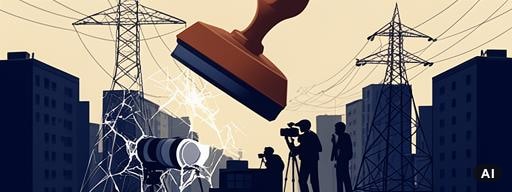
President Volodymyr Zelensky signed a decree on 28 November ordering Ukraine's cabinet to take urgent measures barring media from publishing information about the consequences of damage to critical infrastructure and the time needed to restore it. Decree No. 1151/2026, reported by RBC Ukraine, Liga.net and UNIAN, puts into effect a National Security and Defence Council decision adopted on 23 October on strengthening protection of critical infrastructure for the 2026/27 heating season. The ban also covers the stages and state of construction of protective structures at fuel-and-energy and public life-support facilities, including those set out in regional and city resilience plans. The decree entered into force on publication.
Dmytro Lytvyn, Mr Zelensky's communications adviser, told Ukrainian media that the clause on coverage is assigned in particular to the Security Service of Ukraine, so the package of measures will be determined by the cabinet and the SBU; he said the situation was "complicated" because a large share of such publications appears in anonymous Telegram channels, according to Liga.net and Zerkalo. UNIAN reported that neither the president nor the cabinet had commented further on the decree or how it should be applied in practice. The decree separately tasks the defence ministry and the general staff with drafting and approving a plan for object-level air defence of critical infrastructure, and assigns oversight of the NSDC decision to the council's secretary, Ihor Klymenko, RBC Ukraine reported.
Ukraine already restricts reporting on the effects of strikes. Article 114-2 of the criminal code, introduced shortly after the full-scale invasion, provides for up to 12 years' imprisonment for unauthorised dissemination of information about air defence operations, the movement of military equipment and the real-time consequences of hits, including photographs or video with location data published before official statements — a provision cited by Meduza, Nasha Niva and The Insider. The Insider reported that limits on filming the aftermath of strikes existed earlier but were not applied so systematically to newsrooms.
The measure lands amid sustained attacks on energy infrastructure. Vedomosti cited Russia's defence ministry as saying its forces struck the 330 kV Nyvky substation in Kyiv, the Bila Tserkva combined heat and power plant in Kyiv region and the 110 kV Zarichchia substation in Bila Tserkva, all on 28 November, as well as four railway locomotives. Lenta.ru reported drone strikes overnight on 28 November against energy and fuel facilities, naming the Zarichchia substation and a fuel tank at Kiliia in Odesa region; it also cited Yuriy Butusov, a journalist serving in Ukraine's armed forces, as alleging that 800 million of 900 million hryvnias allocated to protect energy facilities in Kyiv region were embezzled — an accusation no other source cited here corroborates. UNIAN reported that a Russian drone attack on Kyiv that day killed a woman and injured several people. Liga.net, citing the energy ministry, said Russia had struck Ukrainian energy facilities more than 1,000 times as of 18 November.
According to Zerkalo, Denys Shmyhal said in late September that Ukrainian special services had obtained documents indicating Russian plans for massed strikes on energy infrastructure over the winter, including heat and water facilities in large cities; the same outlet quoted Serhiy Koretskyi as saying on 16 November that hundreds of thousands of people were left without electricity in Zaporizhzhia and Dnipropetrovsk regions after further strikes. No deadline for adopting the implementing measures is mentioned in the reports cited here; the specific enforcement mechanisms remain to be defined by the cabinet and the SBU.
The Divergence across 5 points of view
- Critical: RUS, Other sources
- Neutral: SEA, EUR, IND
- Favorable: no bloc
- Pale: the bloc has no reading of this story
Bloc by bloc, from the most critical to the most favourable
RUS Russian & CIS pressCritical
Reading
Kyiv is accused of using wartime censorship to bury corruption and the failure of energy defences.
Description
The decree is used to argue that Kyiv is hiding the scale of damage and the failure of protective works, with corruption allegations about diverted energy-defence funds placed at the centre. Official Russian military claims about strikes on energy and transport sites are woven in to present the ban as a cover-up, and the tone is accusatory and derisive toward Zelensky's government.
Mechanismcorruption inference
Corruption claims about diverted protection funds are fused with official Russian strike reports, so the decree reads as a cover-up rather than a security measure.
The outlets in this area do not agree with one another.
Other sourcesCritical
Reading
Independent observers challenge the blanket ban as unenforceable and prone to abuse.
Description
The decree is read as a broad wartime gag order on damage and repair information, with attention to its vague enforcement and to the anonymous Telegram channels that already circulate such material. Prior criminal liability for real-time filming of air-defence work and strikes is placed alongside the new ban, making the measure look like an extension of an existing secrecy regime; the result is a sceptical, rights-aware account.
Mechanismenforceability gap
By pairing the new restriction with existing criminal liability for filming air defences and with the admission that anonymous Telegram channels drive much coverage, the account makes the ban look both expansive and unworkable.
SEA Southeast Asian pressNeutral
Reading
Moscow’s rationale for striking Ukrainian energy and dual-use sites is given equal standing with Kyiv’s decree, so the ban appears as damage control.
Description
The ban is reported through Russian-supplied material, which pairs the decree with Putin's justification for strikes on Ukrainian economic and dual-use targets and with Russian military claims. The effect is a detached but one-sided account that gives more space to Moscow's rationale than to Kyiv's security argument, with little scrutiny of the censorship implications.
Mechanismsource mirroring
Russian-supplied claims are reproduced alongside the decree without counterbalancing Ukrainian security arguments, making the official line look like the main explanatory frame.
EUR Continental European pressNeutral
Reading
Kyiv presents the measure as a necessary shield for energy infrastructure before winter, while officials concede that enforcement remains undefined.
Description
The decree is presented mainly as a wartime security measure meant to deny Moscow damage assessments before winter, while enforcement details and penalties remain unspecified. Comparisons with Russian media restrictions and reminders of earlier Ukrainian reporting guidance keep the account balanced rather than accusatory, and Ukrainian outlets add the immediate context of intensified strikes and energy outages.
Mechanismsecurity framing
The account balances Ukrainian security reasoning with comparisons to Russian media restrictions and with the absence of stated penalties, making the decree seem proportionate but incomplete.
IND Indian & South Asian pressNeutral
Reading
Ukraine’s tighter reporting rules are placed within a wider war and diplomacy picture, where secrecy is explained as a way to deny Russia targeting data.
Description
The ban is framed as part of Ukraine's tightened wartime reporting rules, justified by the need to deny Russia targeting information as attacks on energy infrastructure intensify. The account keeps a factual, international register, adding diplomatic efforts and the lack of specified penalties, and it avoids taking a firm side on the censorship question.
Mechanismcontextual balancing
By adding diplomatic talks, attack statistics and the missing penalty regime, the account keeps the censorship question unresolved and side-stepped.
This story appeared in
🇷🇺Russia4
🇺🇦Ukraine4
🇮🇩Indonesia3
🇱🇻Latvia3
🇧🇾Belarus2
🇩🇰Denmark1
🇮🇳India1
🇰🇬Kyrgyzstan1
🇱🇹Lithuania1
🇲🇰North Macedonia1
On the same topic
Broaden your view
Zelensky Orders Cabinet to Bar Reporting on Strike Damage to Critical Infrastructure
Decree No. 1151/2026 enacts an October security council decision covering damage reports, repair timelines and protective works, with enforcement to be settled by the cabinet and the security service.
President Volodymyr Zelensky signed a decree on 28 November ordering Ukraine's cabinet to take urgent measures barring media from publishing information about the consequences of damage to critical infrastructure and the time needed to restore it. Decree No. 1151/2026, reported by RBC Ukraine, Liga.net and UNIAN, puts into effect a National Security and Defence Council decision adopted on 23 October on strengthening protection of critical infrastructure for the 2026/27 heating season. The ban also covers the stages and state of construction of protective structures at fuel-and-energy and public life-support facilities, including those set out in regional and city resilience plans. The decree entered into force on publication.
Dmytro Lytvyn, Mr Zelensky's communications adviser, told Ukrainian media that the clause on coverage is assigned in particular to the Security Service of Ukraine, so the package of measures will be determined by the cabinet and the SBU; he said the situation was "complicated" because a large share of such publications appears in anonymous Telegram channels, according to Liga.net and Zerkalo. UNIAN reported that neither the president nor the cabinet had commented further on the decree or how it should be applied in practice. The decree separately tasks the defence ministry and the general staff with drafting and approving a plan for object-level air defence of critical infrastructure, and assigns oversight of the NSDC decision to the council's secretary, Ihor Klymenko, RBC Ukraine reported.
Ukraine already restricts reporting on the effects of strikes. Article 114-2 of the criminal code, introduced shortly after the full-scale invasion, provides for up to 12 years' imprisonment for unauthorised dissemination of information about air defence operations, the movement of military equipment and the real-time consequences of hits, including photographs or video with location data published before official statements — a provision cited by Meduza, Nasha Niva and The Insider. The Insider reported that limits on filming the aftermath of strikes existed earlier but were not applied so systematically to newsrooms.
The measure lands amid sustained attacks on energy infrastructure. Vedomosti cited Russia's defence ministry as saying its forces struck the 330 kV Nyvky substation in Kyiv, the Bila Tserkva combined heat and power plant in Kyiv region and the 110 kV Zarichchia substation in Bila Tserkva, all on 28 November, as well as four railway locomotives. Lenta.ru reported drone strikes overnight on 28 November against energy and fuel facilities, naming the Zarichchia substation and a fuel tank at Kiliia in Odesa region; it also cited Yuriy Butusov, a journalist serving in Ukraine's armed forces, as alleging that 800 million of 900 million hryvnias allocated to protect energy facilities in Kyiv region were embezzled — an accusation no other source cited here corroborates. UNIAN reported that a Russian drone attack on Kyiv that day killed a woman and injured several people. Liga.net, citing the energy ministry, said Russia had struck Ukrainian energy facilities more than 1,000 times as of 18 November.
According to Zerkalo, Denys Shmyhal said in late September that Ukrainian special services had obtained documents indicating Russian plans for massed strikes on energy infrastructure over the winter, including heat and water facilities in large cities; the same outlet quoted Serhiy Koretskyi as saying on 16 November that hundreds of thousands of people were left without electricity in Zaporizhzhia and Dnipropetrovsk regions after further strikes. No deadline for adopting the implementing measures is mentioned in the reports cited here; the specific enforcement mechanisms remain to be defined by the cabinet and the SBU.
The Divergence across 5 points of view
- Critical: RUS, Other sources
- Neutral: SEA, EUR, IND
- Favorable: no bloc
- Pale: the bloc has no reading of this story
RUS Russian & CIS pressCritical
Reading
Kyiv is accused of using wartime censorship to bury corruption and the failure of energy defences.
Description
The decree is used to argue that Kyiv is hiding the scale of damage and the failure of protective works, with corruption allegations about diverted energy-defence funds placed at the centre. Official Russian military claims about strikes on energy and transport sites are woven in to present the ban as a cover-up, and the tone is accusatory and derisive toward Zelensky's government.
Mechanismcorruption inference
Corruption claims about diverted protection funds are fused with official Russian strike reports, so the decree reads as a cover-up rather than a security measure.
The outlets in this area do not agree with one another.
Bloc by bloc, from the most critical to the most favourable
RUS Russian & CIS pressCritical
Reading
Kyiv is accused of using wartime censorship to bury corruption and the failure of energy defences.
Description
The decree is used to argue that Kyiv is hiding the scale of damage and the failure of protective works, with corruption allegations about diverted energy-defence funds placed at the centre. Official Russian military claims about strikes on energy and transport sites are woven in to present the ban as a cover-up, and the tone is accusatory and derisive toward Zelensky's government.
Mechanismcorruption inference
Corruption claims about diverted protection funds are fused with official Russian strike reports, so the decree reads as a cover-up rather than a security measure.
The outlets in this area do not agree with one another.
Other sourcesCritical
Reading
Independent observers challenge the blanket ban as unenforceable and prone to abuse.
Description
The decree is read as a broad wartime gag order on damage and repair information, with attention to its vague enforcement and to the anonymous Telegram channels that already circulate such material. Prior criminal liability for real-time filming of air-defence work and strikes is placed alongside the new ban, making the measure look like an extension of an existing secrecy regime; the result is a sceptical, rights-aware account.
Mechanismenforceability gap
By pairing the new restriction with existing criminal liability for filming air defences and with the admission that anonymous Telegram channels drive much coverage, the account makes the ban look both expansive and unworkable.
SEA Southeast Asian pressNeutral
Reading
Moscow’s rationale for striking Ukrainian energy and dual-use sites is given equal standing with Kyiv’s decree, so the ban appears as damage control.
Description
The ban is reported through Russian-supplied material, which pairs the decree with Putin's justification for strikes on Ukrainian economic and dual-use targets and with Russian military claims. The effect is a detached but one-sided account that gives more space to Moscow's rationale than to Kyiv's security argument, with little scrutiny of the censorship implications.
Mechanismsource mirroring
Russian-supplied claims are reproduced alongside the decree without counterbalancing Ukrainian security arguments, making the official line look like the main explanatory frame.
EUR Continental European pressNeutral
Reading
Kyiv presents the measure as a necessary shield for energy infrastructure before winter, while officials concede that enforcement remains undefined.
Description
The decree is presented mainly as a wartime security measure meant to deny Moscow damage assessments before winter, while enforcement details and penalties remain unspecified. Comparisons with Russian media restrictions and reminders of earlier Ukrainian reporting guidance keep the account balanced rather than accusatory, and Ukrainian outlets add the immediate context of intensified strikes and energy outages.
Mechanismsecurity framing
The account balances Ukrainian security reasoning with comparisons to Russian media restrictions and with the absence of stated penalties, making the decree seem proportionate but incomplete.
IND Indian & South Asian pressNeutral
Reading
Ukraine’s tighter reporting rules are placed within a wider war and diplomacy picture, where secrecy is explained as a way to deny Russia targeting data.
Description
The ban is framed as part of Ukraine's tightened wartime reporting rules, justified by the need to deny Russia targeting information as attacks on energy infrastructure intensify. The account keeps a factual, international register, adding diplomatic efforts and the lack of specified penalties, and it avoids taking a firm side on the censorship question.
Mechanismcontextual balancing
By adding diplomatic talks, attack statistics and the missing penalty regime, the account keeps the censorship question unresolved and side-stepped.